





EUROPE · REGIONAL COMPETITION
New European competition: Moldova and Serbia gain ground in the dried plum market.
The eastern front of the European market: Proximity and low cost
Competition in the European dried fruit market has a consolidated regional player that often goes unnoticed in the overall analysis: the bloc formed by Moldova and Serbia.
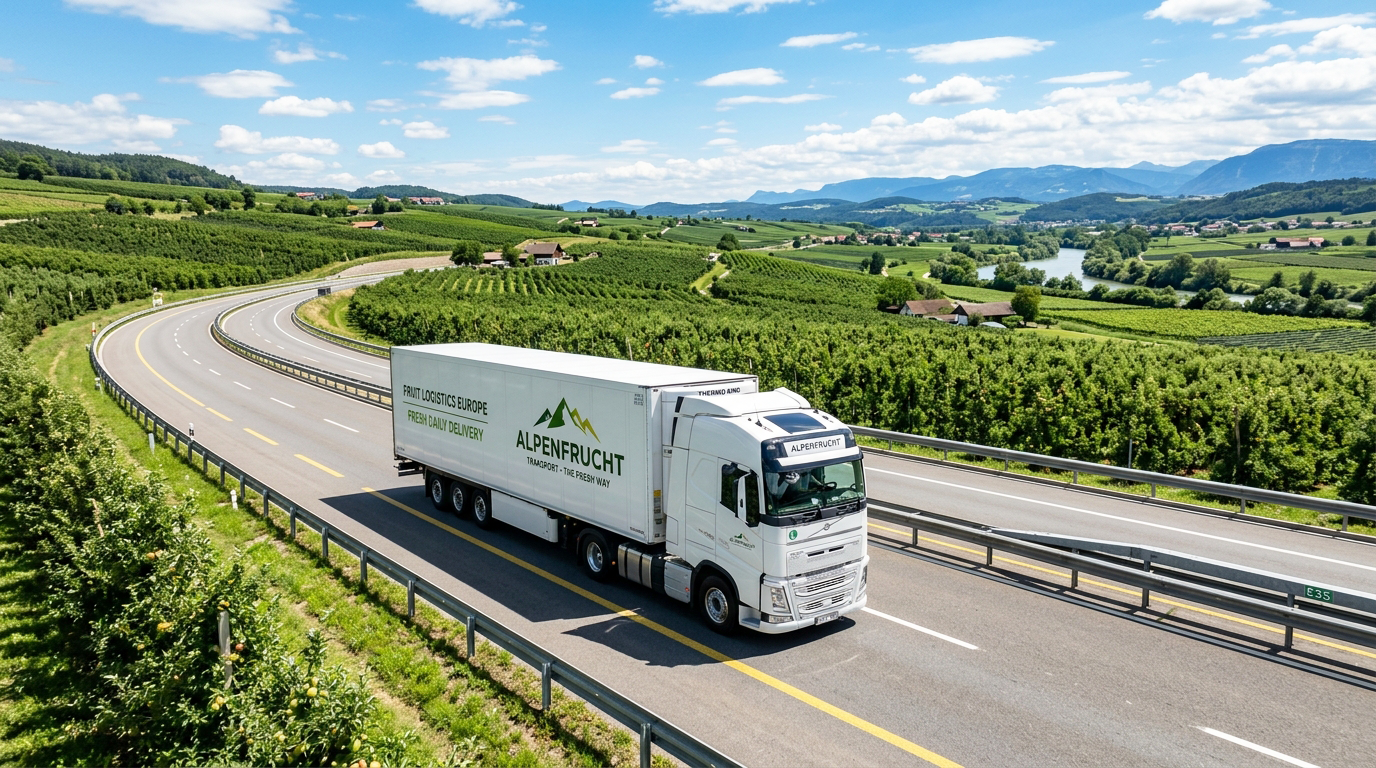
Located on the periphery of the European Union, these two countries have optimal agro-climatic conditions for the production of European varieties (Stanley, Hungarian and d'Agen (introduced). Its main competitive asset is the Direct land logistics by truckA container from Chisinau (Moldova) or Belgrade (Serbia) reaches distribution centers in Germany, Poland or Italy in just 48 to 72 hours, at a fraction of the cost of maritime and multimodal freight from the Southern Cone.
| Comparison of Logistics Times and Costs to Central Europe (Plum Expo 2024) | Worth | Scale |
|---|---|---|
| Moldova / Serbia (Direct Truck) | 3 days | |
| Uzbekistan (Rail / Truck) | 25 days | |
| Chile / Argentina (Ship + Truck) | 35 days |
The low price and preferential tariff strategy in the EU and Russia
Moldova has rapidly capitalized on the signing of the Association Agreement with the EU, Serbia grants 0% tariff quotas for its agricultural exports. At the same time, Serbia maintains smooth trade relations that allow it access to both the European Union market and the Russian Federation market without significant tariff barriers.
This dual tariff and logistical flexibility allows Serbian and Moldovan producers to act as the floor price fixers (floor price) for bulk plums of medium and small size (60/70 to 80/90). Its massive presence in the German, Polish and Baltic markets displaces second-class South American fruit, which cannot absorb the maritime freight costs by competing at those price levels.
Trying to sell surplus bulk unprocessed South American plums to packing plants in Eastern Europe is a business doomed to negative margins. The supply from Moldova and Serbia sets price ceilings that can only be exceeded by large, pitted fruit with no pulp defects and audited food safety certifications.
Implications for South America: Retreat to the high value-added segment
For exporters of Chile and Argentina, The current competitive landscape confirms that the European market no longer absorbs undifferentiated bulk volume. As we demonstrated in our report on the food safety gap in Central Asia, the only way to preserve South American profitability in the European Union is through... specialization in the premium depiding segment (pitted) and larger calibers (>50/60).
South America's structural advantage over its Balkan competitors lies in the scale of its processing plants and their traceability. GlobalGAP / IFS and the homogeneity in annual supply programs with large Western distribution.
- **30 days:** Redirect bulk quotes for small sizes (70/80 and smaller) towards Latin American markets (Brazil, Mexico) where Moldova's freight rates are not competitive.
- **90 days:** Consolidate high-speed pitted plum contracts with industrial customers in Germany, the UK, and France.
- **180 days:** Display social and environmental (SMETA/ESG) audits in European trade proposals to block the entry of informal suppliers from Eastern Europe.
The geographical proximity of Serbia and Moldova demands that South America definitively abandon the dispute over bulk economic plums in the European Union.
Report prepared by the Portal Ciruelas team with reports and data presented by Sebastian Valdes Lutz at Expo Ciruelas secas 2024 and market intelligence.


 Spanish
  English
  Chinese
Leave a comment