






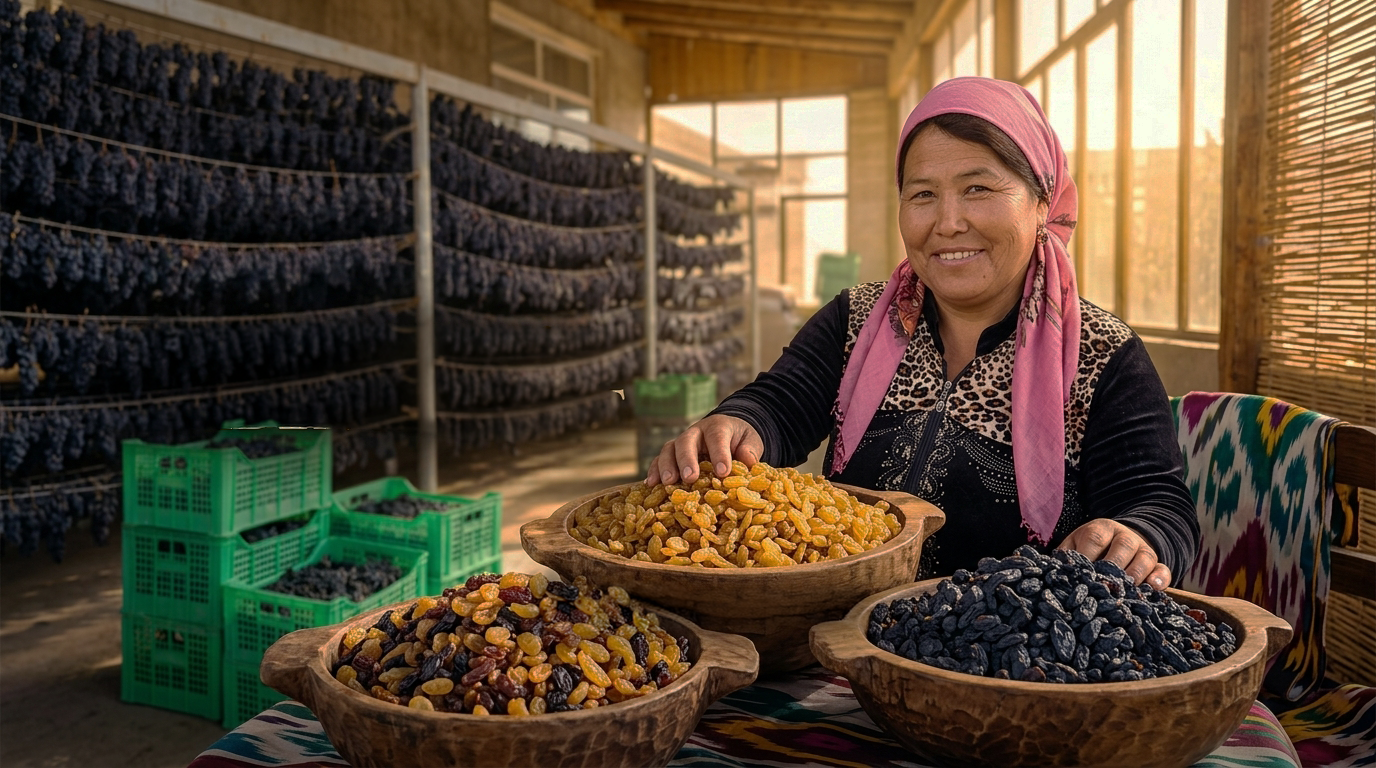
DEHYDRATED · GLOBAL COMPETITION
The Türkiye model in Central Asia: Uzbekistan seeks to create a national brand for raisins and challenge global leadership
The hegemony of raisins in the export matrix of Central Asia
According to the technical analysis prepared by the United Nations Conference on Trade and Development (UNCTAD, 2021The raisin is the true driving force behind the dried fruit industry in Uzbekistan. While prunes account for shipments of US$15.8 million and dried apricots US$13.2 million, raisins absolutely dominate the country's agricultural export basket. US$ 104.6 million (71.9% of the total nuts).
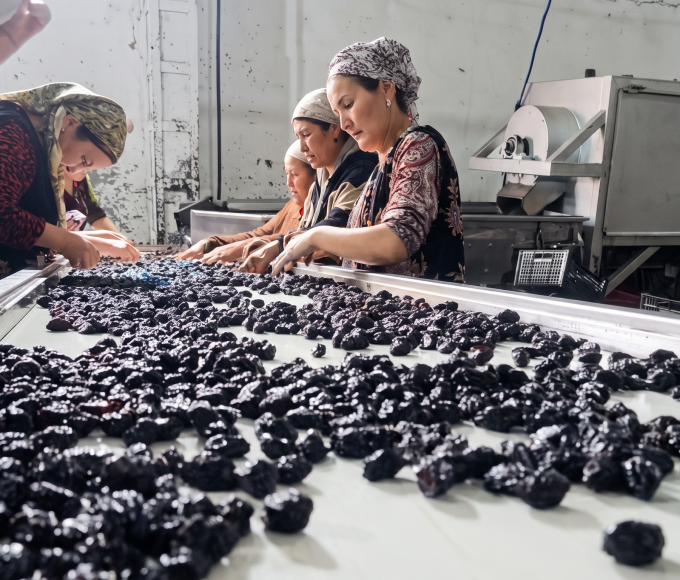
With a 6.01% share of the global market by value (led by Turkey at 26.91% and the United States at 15.01%), Uzbekistan has established itself as a major player in global volume. However, as with its plums, 701% of its bulk raisin shipments are traded at discounted prices due to a lack of brand standardization and quality classification.
| Global Market Share in Raisin Exports by Value (UNCTAD 2021) | Worth | Scale |
|---|---|---|
| Türkiye (US$ 466.7 M) | 26.9% | |
| United States (US$ 260.3 M) | 15.0% | |
| Chile (US$ 126.8 M) | 7.3% | |
| Uzbekistan (US$ 104.6 M) | 6.0% | |
| South Africa (US$ 98.2 M) | 5.6% |
The strategy of designation of origin and imitation of the Turkish model
To address the value gap, UNCTAD recommended that the Ministry of Trade of Uzbekistan implement a national strategy of Country Brand and Protected Designation of Origin, Taking as a direct reference point Turkey's experience in the Malatya region with dried apricots, the plan includes:
1. Standardization of local varieties: Grouping the production of traditional varieties such as Soyagi, Sabza y Avtobi under quality seals verified by the State. 2. Launch of collective brands: Promote the brand ""Uzbek Raisins"" at agri-food fairs in China (CIIE) and the Middle East (Gulfood) to eliminate intermediaries in CIS countries. 3. Tariff utilization: Utilize the 0% tariff granted by the European Union under the GSP+ regime to position raisins golden y black in the bakery and cereal industry in Germany and the Netherlands.
Developing a national brand benefits more than just Uzbek raisins. The creation of export consortia and state-funded analytical infrastructure will reduce fixed costs for all the region's dried fruits, facilitating the subsequent scaling up of its plum and apricot production.
Implications for South America: The risk of contagion in the dehydrated portfolio
For exporters of Chile and Argentina, Uzbekistan's advance in raisin production is an early warning indicator. Chile, which exports US$126.8 million in raisins (7.31% of the global market), competes directly in dark sizes (Thompson / Flame) in Europe and Latin America. If Uzbekistan manages to consolidate its national brand and standardize its washing and packaging processes, it will capture a significant portion of the bulk industrial demand.
As we have warned in our analysis on the [competitiveness of Central Asia](articulo_uzbekistan_trampa_commodity.md), the South American response should not be to lower prices, but to accelerate the integration of sustainability certifications and value-added packaging.
- **30 days:** Monitor FOB quotations for Uzbek raisins in Baltic and Middle Eastern ports to adjust price ranges during the sales season.
- **90 days:** Negotiate combined prune and South American raisin contracts with EU industrial clients, guaranteeing zero residue and ESG traceability.
- **180 days:** Strengthen promotional campaigns for the South American origin seal in off-season markets to protect the *price premium*.
Central Asia's institutional progress in dried fruit demands that South America raise the bar even higher for trade differentiation.
Report prepared by the Portal Ciruela team with data from the UNCTAD technical report (2021) and market intelligence.




 Spanish
 English
 Chinese


Leave a comment