

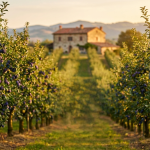

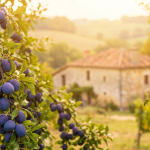


The Mercosur-EU agreement progressively reduces customs duties on dried plums. This presents an opportunity for producers in Mendoza to regain competitiveness.
The opportunity that the agribusiness sector was waiting for
Following the first-ever shipment of Mendoza walnuts to Spain with zero tariffs, it's now the turn of our dried plums. The tariff reduction achieved through the Mercosur-European Union agreement marks a turning point for a sector that concentrates the 90% of its industrial capacity in Mendoza.
For years, Mendoza exporters have had to navigate tax burdens ranging from 15% to 30% in key European markets. This tax barrier meant losing competitive ground to Chile, our main global rival. Today, the playing field is beginning to level.
The sure path to "Zero Tariff"«
Under the new agreement, dried plums fall into what is called "Category 4." What does this mean in concrete terms for the business? It means a phased tax reduction plan that will eliminate tariffs within five years, reducing the cost at a rate of 20% per year.
The immediate impact by 2026:
From this "year zero," plums arriving in European markets with a Mercosur certificate of origin will no longer be subject to the historical 9.6% tax. This year it drops to 7.7%, representing a direct gain in competitiveness for the entire local production chain.
Argentina consolidates its position on the global podium
The global outlook shows extremely encouraging signs for our fruit-growing region:
- California takes a step backwards: The historic North American giant shows a sustained decline in its production and planted hectares over the last 25 years.
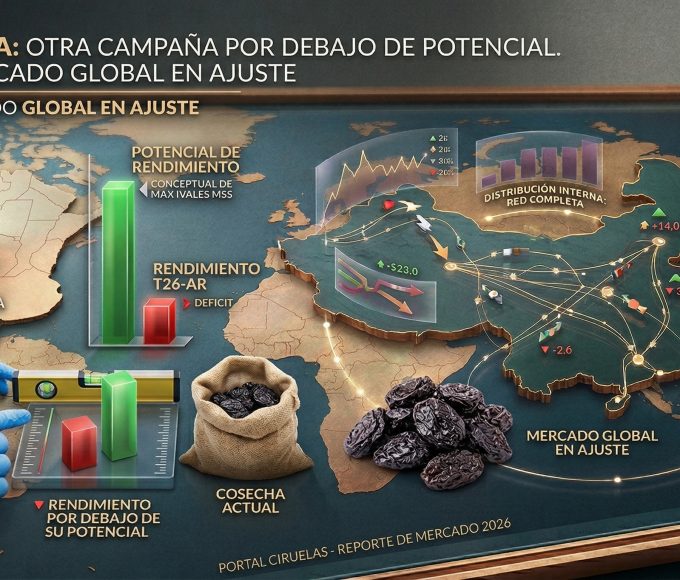
- The South American boom: While Chile maintains consistent volumes, Argentina's fluctuates depending on climatic factors. Even so, our country is consolidating its position as the world's third largest exporter of dried plum.
- Strategic destinations: While markets like Brazil and Japan are pillars of our sales, regaining ground in the European Union It diversifies risk and multiplies options for placing the largest sizes of our harvest.
The time to certify and move forward
With approximately 10,000 hectares under cultivation nationwide (almost all of which are in Mendoza, with San Rafael and General Alvear alone accounting for nearly 851,000 hectares), the sector has the scale to respond to this new scenario. The efforts undertaken by organizations such as the Mendoza Plum Exporters Committee (Cecim) demonstrate that collaborative work yields tangible results.
For exporters, the message is clear: the gradual opening of the European market provides the predictability necessary to invest in technology, efficiency and quality and provides market diversification.
The challenge that the agreement overcame: European resistance
Reaching this point was not easy. The agreement faced strong opposition from European farmers, who argued that trade liberalization created "unfair" competition. Their main complaint was that South American producers are not subject to the strict regulations of the European Common Agricultural Policy (CAP), nor to the same costs for certifications, energy, or labor.
France spearheaded this opposition, with protests that included tractors blocking Paris and President Emmanuel Macron announcing his vote against the measure. Europeans demanded "mirror clauses" to force imported products to meet the same production standards.
Despite this resistance and France's negative vote, the trade portion of the agreement provisionally entered into force on May 1, 2026. For the Argentine plum industry, the European door remains ajar. Now the real challenge begins: to actually get through it.
Sources: Sitio Andino (05/10/2026); Bureau National Interprofessionnel du Pruneau — Tableau de bords des indicators, 1st quarter 2025; France 24 (01/08/2026); The Conversation (01/14/2026).



 Spanish
  English
  Chinese


Leave a comment