

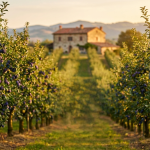

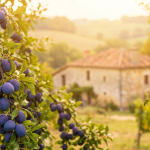


Without frost but with the threat of hail, the French campaign is struggling between the excellence of its quality, the global drop in volume and the strong regulatory tensions.
The campaign is still in play
France has experienced two consecutive seasons below its historical average of 40,000 tons (recording around 30,500 in 2024 and similar estimates for 2025). However, 2026 began with a different sign: The Sud-Ouest overcame the frost period without incident and the fruits are already in full development.
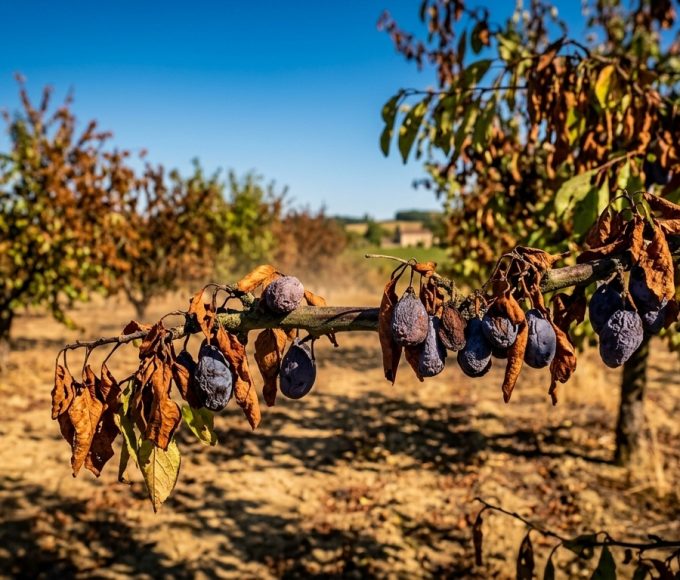
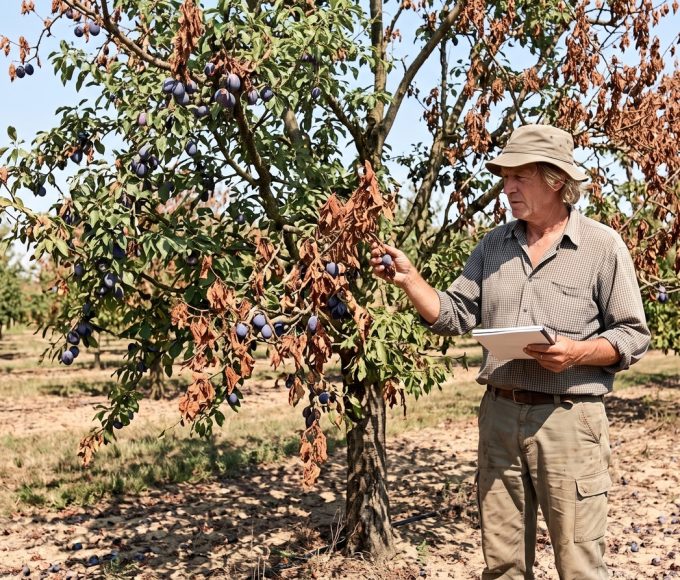
But the relief was short-lived. Over the past weekend, severe storms and hailstorms reignited concerns. While there are still no official confirmations of widespread damage in the area, Pruneau d'Agen, The weather is once again the biggest stress factor for developing fruit.
Less fruit, but of excellent quality.
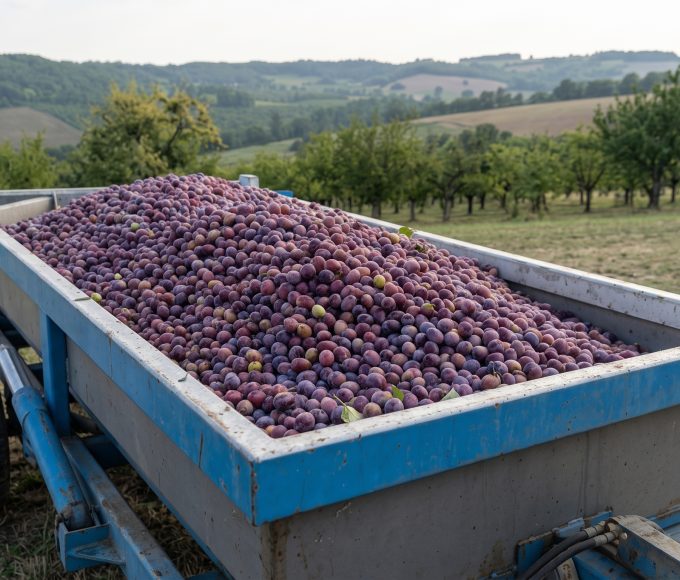
What is already a proven fact is the accumulated quality of the product. The sugar content of the 2025 harvest far exceeded the average of the last decade, maintaining very solid sizes. The premise seems to be: Less fruit, but better fruit.
Can this trend continue if 2026 finally delivers the expected volume? The global context supports France's position. With California accumulating water stress, Chile closing 2025 with reduced stocks, and Argentina once again facing climate variations, Global supply is tight and prices are showing strength..
For a country that allocates up to 35% of its production to export (focusing on the European Union, United Kingdom, Japan, China and Canada), this scenario represents an invaluable window of opportunity.
The dilemma: Agroecology vs. Competitiveness
But the real storms in France aren't just climatic; they're also regulatory. Local producers are demanding access to plant protection products (such as acetamiprid, flupyradifurone y lambda-cyhalothrin) that are permitted for their competitors in Chile and Argentina.
This asymmetry represents a direct competitive disadvantage. The French industry faces the dilemma of leading the European green transition while demanding basic protection tools to secure its harvest.
The focus on added value
Faced with lower-cost sources, the long-term French strategy is non-negotiable: PGI (Protected Geographical Indication), extreme traceability, organic production and high value-added formats (as mi-cuit, (boneless, chocolate-covered or pureed).
The biggest challenge will be translating all that differentiation into the final consumer price, in a context where production costs keep rising. Is a product's origin enough to sustain margins when volume falls and input costs rise? That's what the sector will have to prove. But first, they must weather the storm.
Sources: BIP, Ministry of Agriculture, La France Agricole and sector reports. May 2026.


 Spanish
  English
  Chinese


Leave a comment