




[AGRICULTURAL KNOWLEDGE · MANAGEMENT]
Field audit: The method to measure and control your pruning contractors
The risk of operational intuition
For many growers, the success of pruning is visually assessed at the end of the day. However, in a commercial context where profitability depends on ensuring maximum fertility to compete with Asian production advances, leaving the future of the harvest to the pruner's unaudited "judgment" is an unacceptable risk.
The real problem with not precisely controlling pruning is over-pruning. Technically, in a balanced tree, the intervention should not exceed 20% of the wood.
Exceeding the 20% wood removal threshold triggers a physiological response that invigorates the plant. This excess vigor results in the generation of very strong shoots in spring, which compete directly with the developing fruit and are the main cause of fruit abortion during the fruit set stage.
Control cards: Auditing the work
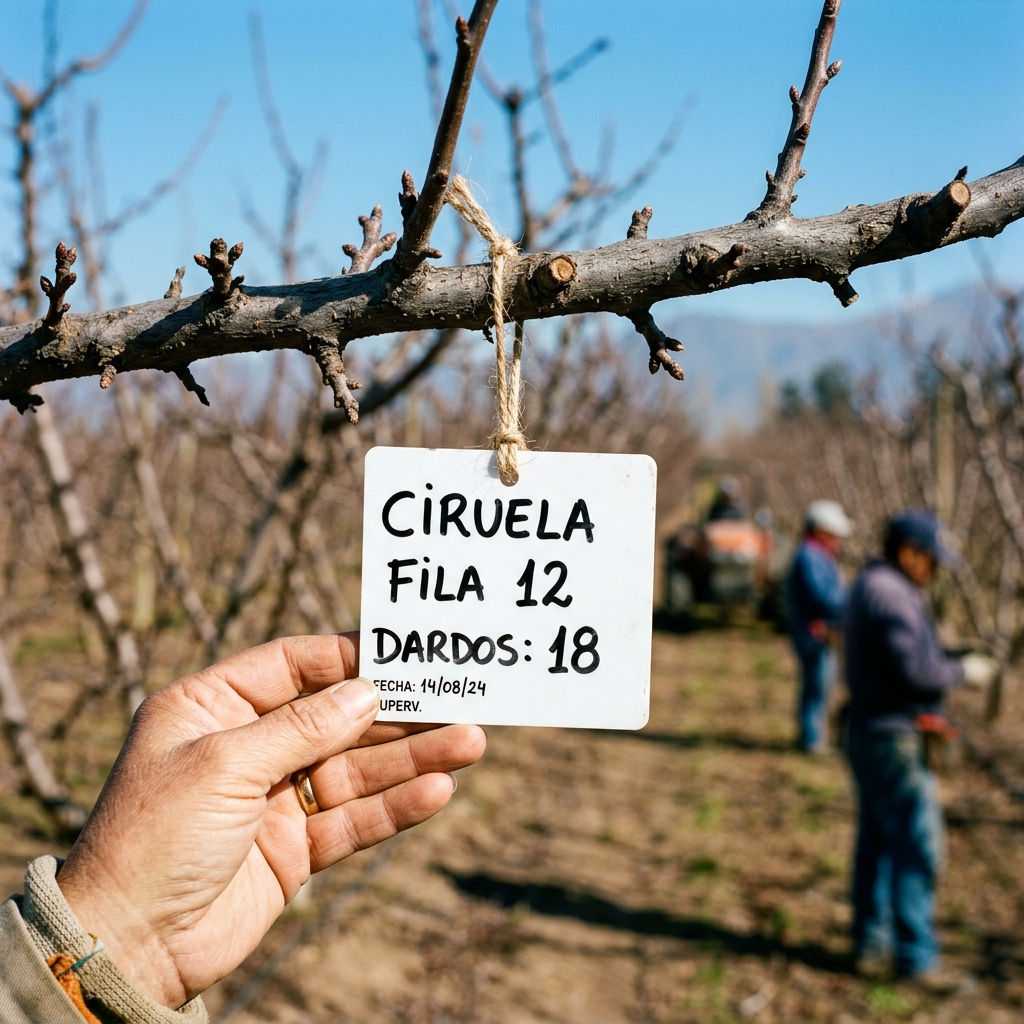
Agricultural advisor Iván Villablanca Prinea implements with his clients a simple but relentless system to audit the work instructed to the pruner: validation by counting.
The method consists of randomly marking trees in the plot. If the orchard is homogeneous, the selection is direct. If it is uneven, the sample must be stratified by plant size (Large, Medium, Small).
- **Pre-pruning record:** Hang a laminated card on the sample tree with the exact initial count of spurs, shoots (15-25 cm with fertile buds) and twigs.
- **Post-pruning validation:** Once the contractor finishes marking the tree, the supervisor must record on the same card what actually remained on the plant.
- **Dead Load Adjustment:** In orchards affected by *Phellinus* or wood dieback, always subtract the missing plants from the potential calculation. Do not project based on theoretical hectares.
This mechanism allows for real validation and immediate corrective action with the pruning team before they ruin entire hectares.
Pruning requires prior data
Field auditing only works if there is a clear numerical objective. Villablanca emphasizes that the database for the season should be built by cross-referencing the laboratory analysis of bud fertility (primordia per bud and buds per spur) with the historical fruit set percentage.
To this must be added the climatic context: faced with winters lacking sufficient chilling or forecasts of spring rains, the instruction to the pruner should be to retain a greater number of spurs. They act as a productive life insurance policy; if fruit set is excessive, there will always be the option of adjusting the crop load with subsequent thinning.
***
Original source: Author: Iván Villablanca Prinea Profession: Agricultural Engineer – Independent Agricultural Consultant Entity/Contact: PUCV Advisor | ALBION CHILE (+56995391112)






 Spanish
  English
  Chinese


Leave a comment