




FRANCE
Historic heatwave in France: the "blower effect" threatens from 30% to 50% of the Agen harvest and shakes the European supply
The "hair dryer effect": extreme temperatures scorch the orchards of Ente
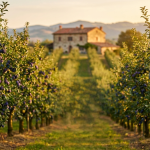
Southwest France, the heart of the Pruneau d'Agen region, experienced one of the darkest chapters in its agricultural history. For eleven days, thermometers in Lot-et-Garonne exceeded 35°C in the shade—with peaks of 42°C—translating into aberrant readings of up to 38°C in dry soil and over 50°C in direct sunlight.
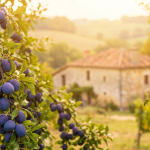
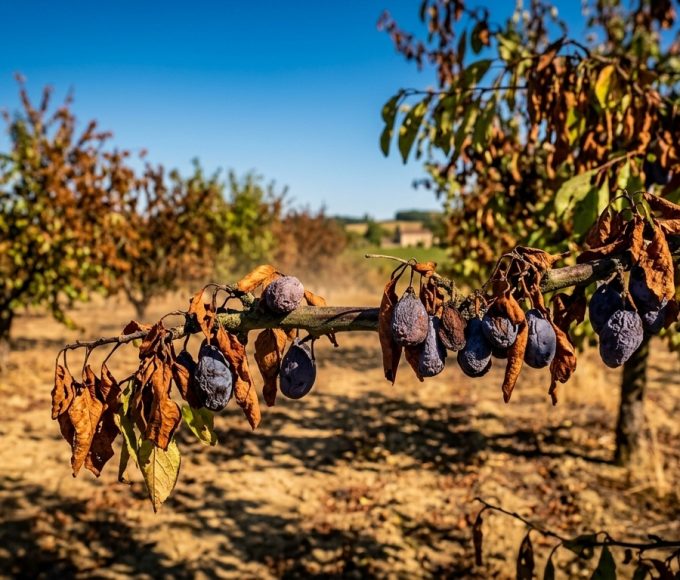
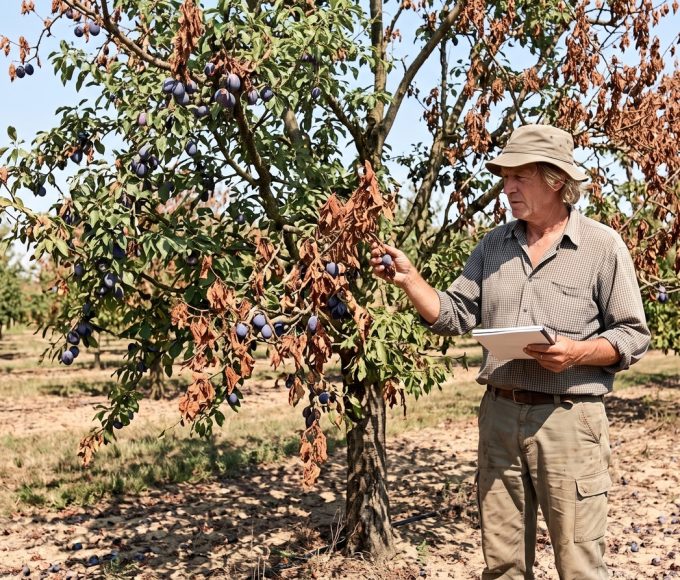
This extreme heat arrived with the Autan wind, a hot, dry flow that created a "hair dryer effect" on the plum trees of Ente. The result is devastating: yellowing leaves, scorched branches, and fruit falling en masse to the ground before ripening. The most experienced growers claim to have never seen anything like it.
The water crisis worsened the situation. Although 751,000 hectares of the orchards have irrigation, evapotranspiration reached 10 mm per day. To compensate for this loss, farmers needed to apply 20 mm every two days, a volume physically unmanageable for the distribution networks and local reservoirs, which are now empty.
Without reserve stock and with productive capital mortally wounded
The immediate concern is the 2026 harvest, which will begin at the end of July. However, the real problem lies in the medium term. Extreme temperatures have damaged the young shoots and branches where flowering induction should take place for 2027 and 2028. This means that France's production potential will be limited for three years.
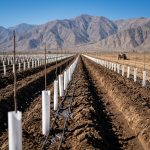
This is compounded by an estimated tree mortality rate of 101% of the department's total area (approximately 1,000 hectares, equivalent to 280,000 trees). Producers are facing the need to uproot and replant entire plots in a context where local nurseries can no longer meet the demand for plants.
The financial viability of the sector is at a critical juncture. Fewer than 201% of producers have adequate climate insurance. The current system calculates compensation based on the average of the last five years, already depressed by the frosts of 2021 and 2022. Without a state rescue plan, the Producers' Union warns that up to 501% of farms could close.
The accumulation of climate disasters has left French producers without capital. The traditional agricultural insurance system does not respond to the reality of consecutive extreme events, leaving the Pruneau d'Agen industry exposed to an unprecedented structural collapse.
Global reconfiguration: the impact on export flows
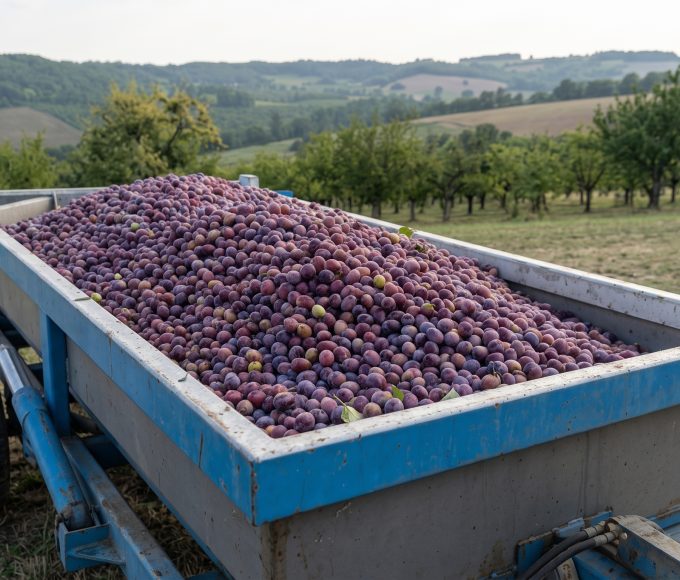
For international processors, exporters, and distributors, the disaster in Lot-et-Garonne is a game-changer for the second half of the year. France is not only a key player in European domestic consumption but also a leading processing hub. With remaining stocks at historic lows after two previous lackluster seasons, the loss of up to 13,000 tons of fruit will put immediate upward pressure on prices across the continent.
This shortage creates a scenario of high demand for exporters in the Southern Hemisphere and North America. Large European buyers, who typically source their products from the local Protected Geographical Indication, will be forced to seek alternatives in the international market to fill their supply gaps and keep their packing lines operational.
French agricultural research is already working on developing more heat-resistant varieties and new pruning systems to shade orchards. However, these structural solutions will take years to implement. In the meantime, the global market will have to absorb the impact of a visibly reduced European supply.
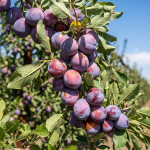
- **Monitor the quality of the surviving fruit:** Harvesting early, by July 25, could result in plums with lower sugar content and smaller sizes, increasing the premium for larger fruit.
- **Opportunity for the exporting bloc:** The lack of stock in France will accelerate the demand for high-quality pitted plums from competitive origins such as Chile and Argentina.
- **Early contract coverage:** European Union importers will seek to close supply agreements earlier than usual to avoid price volatility.
The production collapse in the Lot Valley demonstrates that climate change is no longer a long-term theoretical threat, but an immediate operational disruption. The dried plum industry is undergoing a forced reconfiguration of its trade flows, where climate resilience and security of supply have become the most valuable assets.



 Spanish
  English
  Chinese


Leave a comment