






MARKETS · COMPETITION
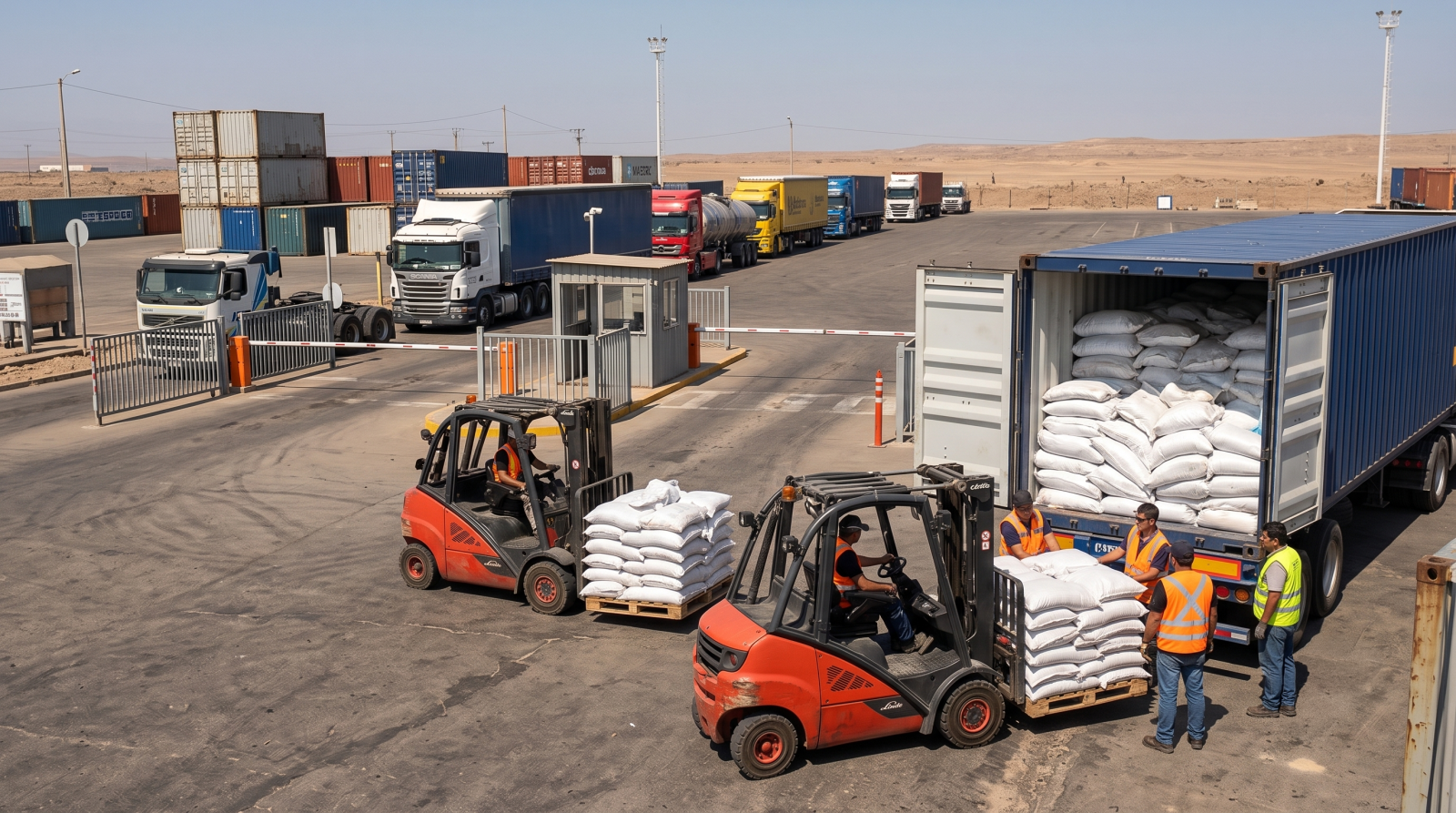
The advantage of trucks vs. ships: Why is Uzbekistan taking market share from South America in China with 21,600 tons?
The Central Asian emergence on the global map
For decades, the Southern Cone's export industry focused its competitive strategy on traditional players like the United States, France, and Argentina. However, available data reveals a profound shift in the geography of the business: Uzbekistan has gone from being a marginal player to becoming a regional giant in Central Asia.
With an annual production of 200,300 tons in 2024 (easily placing it in the world's Top 10), Uzbekistan concentrates 64% of its orchards in four key provinces: Tashkent, Namangan, Andijan and the strategic Fergana Valley.
| Fresh Plum Production in Uzbekistan (Tons) | Worth | Scale |
|---|---|---|
| 2020 | 130100 | |
| 2021 | 143600 | |
| 2022 | 177900 | |
| 2023 | 178600 | |
| 2024 | 200300 |
| Main Export Destinations of Plums from Uzbekistan (2025 – Tons) | Worth | Scale |
|---|---|---|
| China | 21600 | |
| Kazakhstan | 6200 | |
| Russia | 6000 | |
| Türkiye | 1200 | |
| Belarus | 793.1 | |
| Georgia | 711.5 |
Land freight and proximity: The equation that throws the ship off balance
The determining factor in Uzbekistan's rapid market penetration is not solely its low labor costs for harvesting, but its geographical advantage. Unlike South America, which faces 35- to 45-day sea voyages to get containers to ports in eastern China, Uzbekistan operates via direct land corridors by road and rail to China's western border (via Kyrgyzstan and Kazakhstan).
This truck connectivity allows it to supply the demand of western and central China in a matter of days, minimizing tied-up working capital and drastically reducing the impact of international ocean freight rates. This logistical advantage, combined with lower production costs, has allowed Uzbekistan to establish itself as one of the fastest-growing competitors in the Chinese dried plum market, gaining market share especially in the medium and small sizes (dominated by its main variety, the Vengerka or Hungarian plum), where it competes directly with the South American supply.
Uzbekistan is aggressively capturing the demand for smaller-stone dried plums in China and Russia, setting an extremely low price floor that makes bulk South American exports in those segments unfeasible.
The varietal map and its impact on supply
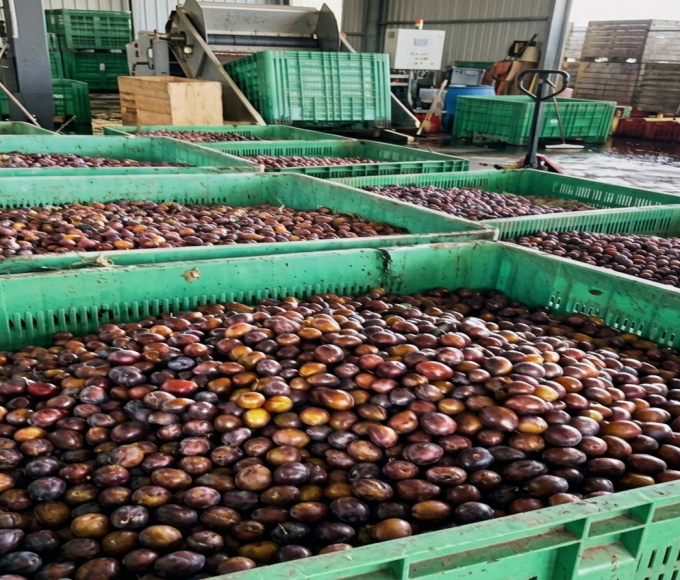
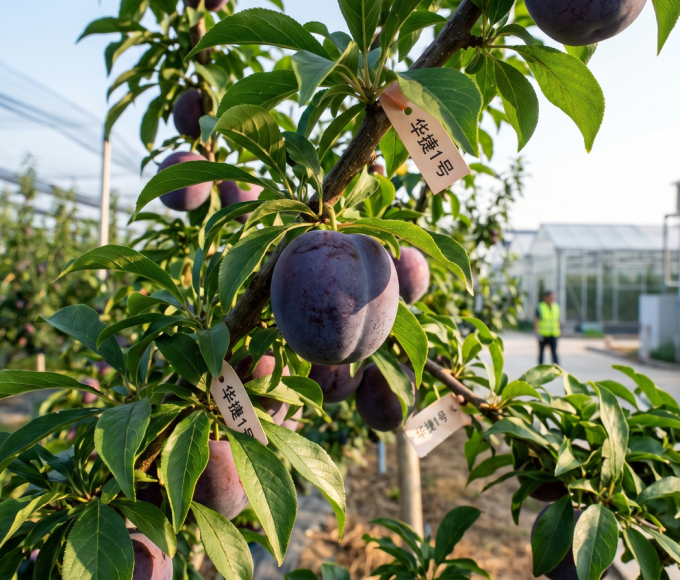
The Uzbek production matrix is mainly based on variety Vengerka (a Hungarian-type plum, small to medium in size, high in sugar content and highly resistant to cold) and in the variety Hispanca. Although the Uzbek industry still suffers from high fragmentation among family micro-producers and limited agricultural mechanization, the organization of its export sector has managed to consolidate fast and aggressive supply blocs towards border markets such as Russia, Kazakhstan, Turkey and Georgia.
Given this scenario, the strategy for exporters in the Southern Cone is not to engage in a price war on bulk volume without deboning, but rather to accelerate differentiation towards quality and added value. As analyzed in our recent report on the [quality strategy in the face of global supply](https://portalciruelas.com/2026/05/04/el-mercado-de-la-ciruela-en-china-2025-oportunidades-reales-ante-un-clima-desafiante/), the market rewards those who dominate large fruit and the pitting industrial process.
- 30 days: Audit the customer portfolio in China and verify what percentage of the volume shipped corresponds to small sizes (70/80 or less) threatened by Uzbek fruit.
- 90 days: Reorient supply contracts towards pitted plum programs of sizes 40/50 and 50/60, where Uzbekistan does not have industrial processing capacity.
- 180 days: Strengthen the certification of food safety and traceability (BRC/IFS) in the plant, an attribute that the atomized family production of Central Asia cannot homologate in the short term.
Uzbekistan's pressure on the Asian land route confirms that the commodity-volume business has an expiration date. South American competitiveness will depend strictly on industrial precision and premium quality.
Report prepared by the Portal Ciruela team with official data from siat.stat.uz and analysis of the agricultural export market.
—





 Spanish
  English
  Chinese


Leave a comment