






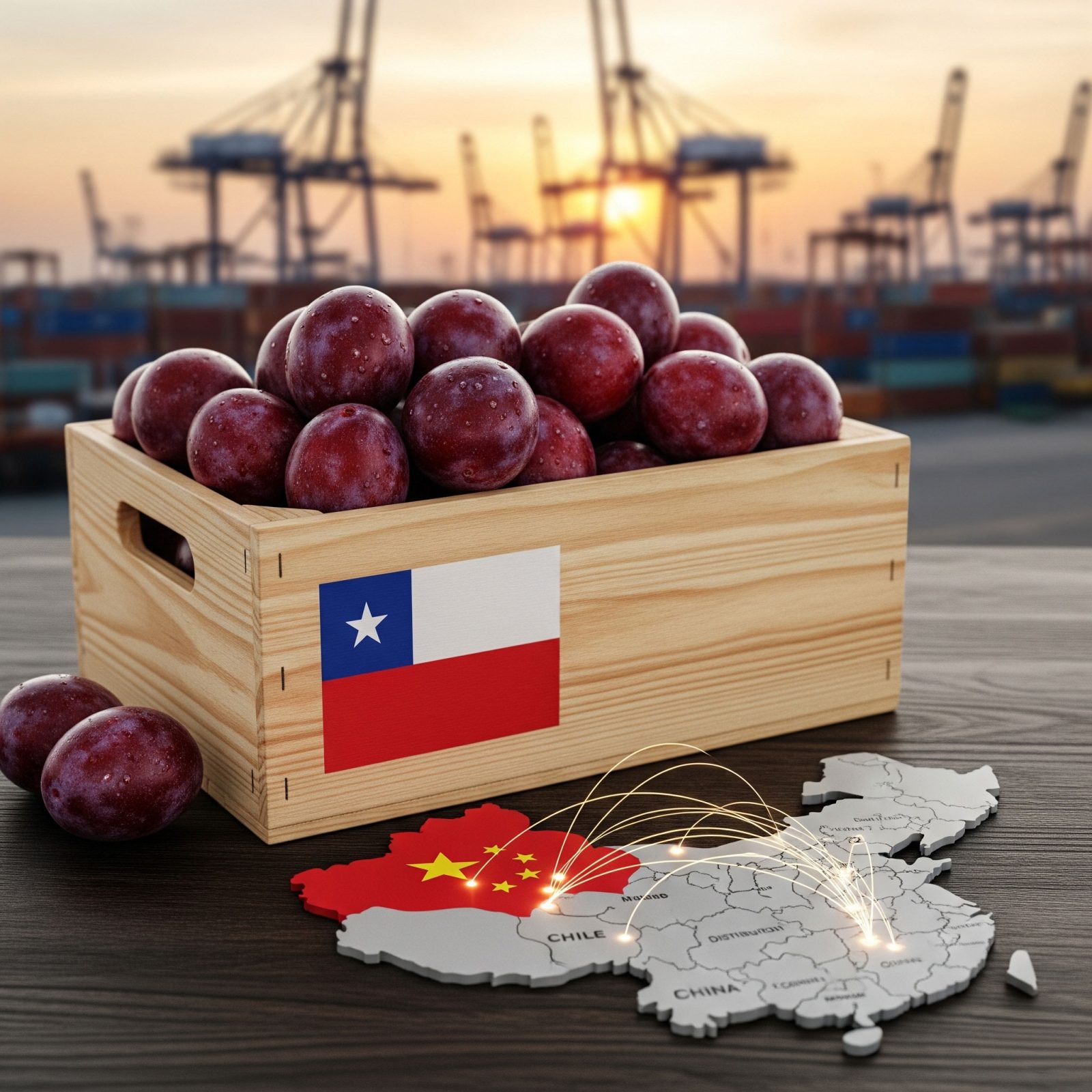
The Logistics Chain of the Chilean D'Agen Plum in China: Ports, Markets and Routes
Exporting fresh D'Agen plums to China doesn't end when the product leaves the Chilean port: a second, equally complex stage begins, one that largely determines the commercial outcome of the operation. Internal logistics in China —ports of entry, primary markets and secondary markets— is a highly structured system that exporters must know in detail to ensure that their product arrives in optimal condition to the end consumer.
Xinjiang: The Local Production Zone as a Benchmark
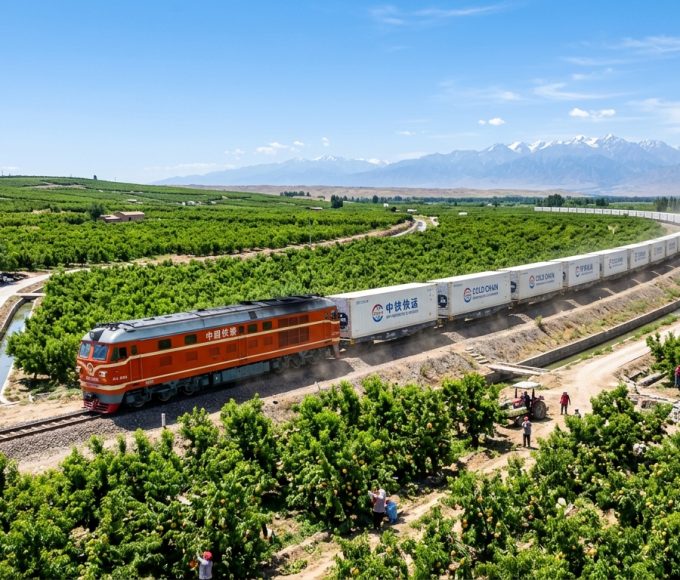
Before discussing the distribution of imported products, it is important to understand China's production geography. The region of Xinjiang, The area in the far northwest of the country is the main producer of domestic D'Agen plums. Although this production is mainly marketed during the summer months (July-August) and does not compete directly with the Chilean product during the season, its existence influences the price structure and consumption habits of the market.
Ports of Entry: Guangzhou, Hong Kong and Nansha
The vast majority of Chilean products enter China by sea through three ports in the south of the country:
- Guangzhou: The main logistics hub in southern China, with excellent connectivity to the interior of the country and a consolidated cold infrastructure for handling imported fresh fruit.
- Hong KongAlthough its role has evolved, it remains a relevant entry point for premium products destined for the higher-income markets of southern China.
- Nansha: Expanding port within the Guangzhou metropolitan area, which is gaining market share as an efficient alternative for fresh fruit imports.
The concentration in ports in southern China makes geographical sense: from there, distribution to primary and secondary markets in the interior and north of the country is mainly done by refrigerated land transport.
Primary Markets: Shanghai and Jiaxing
Once the product enters through the southern ports, its main destination is the primary wholesale markets, where the commercial transaction between importers and distributors takes place:
- ShanghaiThe Shanghai wholesale fruit market is the most important in China in terms of volume and benchmark price. What happens in the Shanghai markets largely determines the spot price of the product throughout the country.
- JiaxingA city near Shanghai, with one of China's largest wholesale fruit markets. It is a strategic distribution hub supplying both Shanghai and the adjacent provinces of Zhejiang and Jiangsu.
Secondary Markets: The Inland Distribution Network
From the primary markets, the product flows into a network of secondary markets distributed throughout the country, which redistribute the product to retailers and the end consumer:
- ShenyangMain market of northeast China (Manchuria), supplying provinces such as Liaoning, Jilin and Heilongjiang.
- Gaobeidian: Strategic market in the Beijing-Tianjin-Hebei region, one of the world's largest urban clusters.
- Wuhan: Geographic center of China and distribution hub for the central provinces of the country.
- Changsha: Capital of Hunan, a growing market that supplies the south-central provinces.
Why Logistics Defines Business Success
In the fresh fruit business, time and temperature are money. A product that takes too long to reach the end consumer from the port, or that suffers breaks in the cold chain during its internal distribution, quickly loses value. That's why Chilean exporters who work with specialized logistics operators in China, who have refrigerated warehouses at key hubs, and who have direct agreements with major distributors in primary markets, consistently obtain better prices and greater customer loyalty.
Understanding this logistics map—from Xinjiang as a domestic benchmark to the southern ports, the primary markets in the Yangtze Delta, and the secondary network covering the interior—is today a basic competence for any serious Chilean exporter who wants to operate in China consistently and profitably.






 Spanish
  English
  Chinese


Leave a comment