





CHINA · MARKETS AND PRODUCTION
Jiashi's Express: How Chinese state logistics and 38,000 hectares of plum orchards are reshaping the Asian market.
The Jiashi phenomenon: industrial scale, logistical speed, and extended storage.
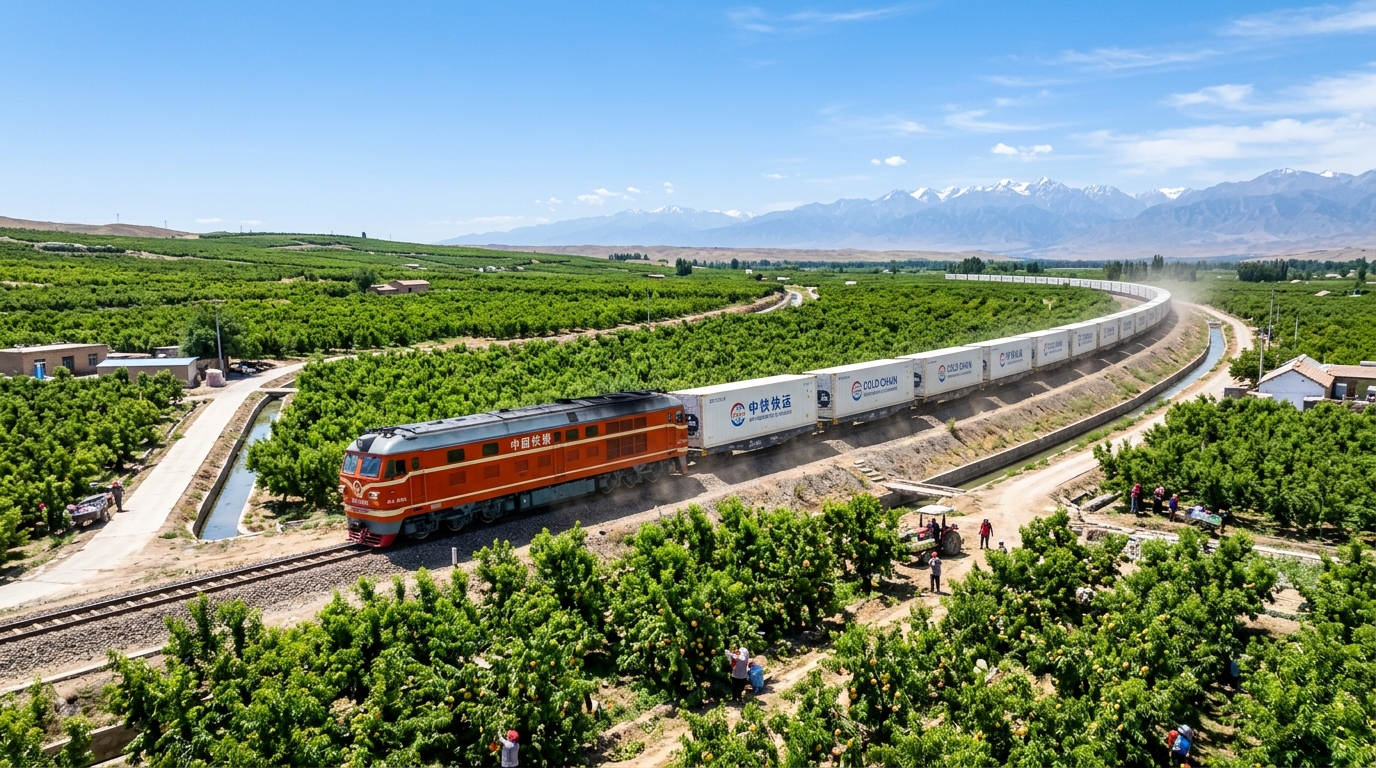
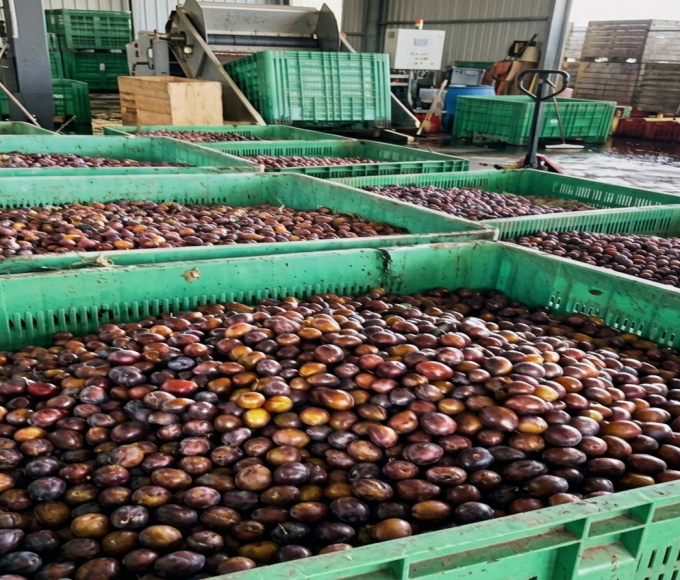
China's fruit-growing strategy is undergoing an unprecedented structural transformation. The epicenter of this transformation is Jiashi County, located in Kashgar District, Xinjiang Uyghur Autonomous Region, where the combination of state subsidies, large-scale irrigated land, and cutting-edge technology has created the largest plum-growing complex in Asia.
According to the official assessment, Jiashi accounts for 38,000 hectares of French plum cultivation, representing 501% of the national planted area for this variety. This dominant position is not accidental: behind its development is a consortium of 18 state-owned corporations that coordinate production, processing, and marketing under an integrated system.
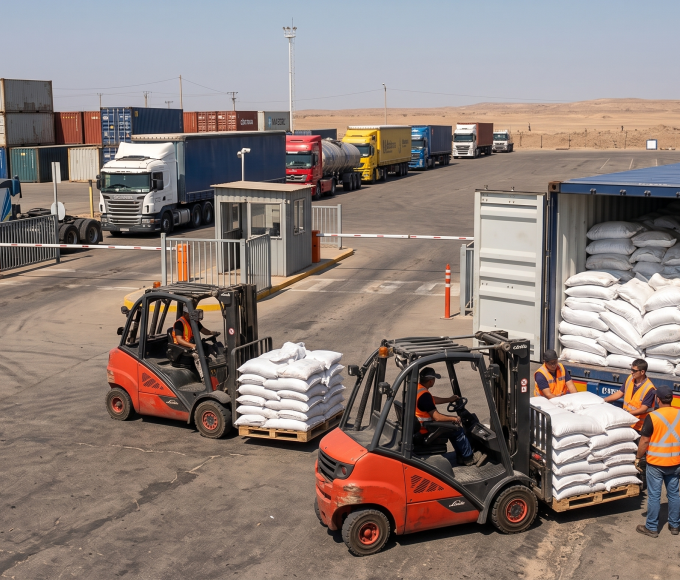
The backbone of this development is the so-called "Jiashi Express": a refrigerated rail logistics corridor that directly connects packing centers in Xinjiang with the Shenzhen and Guangzhou distribution hub in just 48 hours. This breakthrough allows fresh plums to reach major consumer markets in southern China at a fraction of the cost and time of fruit imported by sea.
But the most disruptive qualitative leap is not in the speed of the transfer, but in the extension of the commercial life.
Based in the Guangdong Jiaxinmei Modern Industrial Park, Jiashi has established a national backbone cold chain logistics base with a tiered storage system: counties with 10,000 tons, municipalities with thousands of tons, and central villages with 100 tons. The total storage capacity reaches 500,000 tons.
The impact of this infrastructure is radical: through an intelligent scheduling system, Ximei's concentrated listing—naturally limited to a window of 10 to 20 days— It now extends to 2 to 6 months of sales outside the period of greatest supply concentration..
This data changes the entire framework of analysis. It's not just about producing more and transporting faster; it's about being able to sell out of season without depending on off-season imports.
This is complemented by a deep digitization platform: 259 rural e-commerce service stations with express delivery coverage from 100% to the village level, forming a closed-loop system of "delivery + e-commerce + agricultural products + farmers." Fruit leaves the Gobi orchards and goes directly to thousands of homes, eliminating traditional intermediaries and consolidating state control over the entire value chain.
| Key Indicators of the Jiashi Fruit Hub in Xinjiang. | Worth | Scale |
|---|---|---|
| Planted Area: 38,000 ha (570,000 mu). | ||
| State-owned corporations. 18 companies. | ||
| Logistics time by train to Shenzhen: 48 hours.
Cold Storage Capacity: 500,000 t. Commercial Window Extension. From 10-20 days to 2-6 months. Rural E-commerce Stations. 259 Target Fresh Production 2035: 500,000 t. |
The state plan to 2035 and the participation of 18 corporate conglomerates.
Jiashi's development is not a fragmented agricultural phenomenon, but a five-year plan directed by the Chinese state. Currently, 18 public and mixed corporations operate in the area, vertically integrating everything from nurseries with high-yield varieties to automated optical sorting plants and continuous drying facilities.
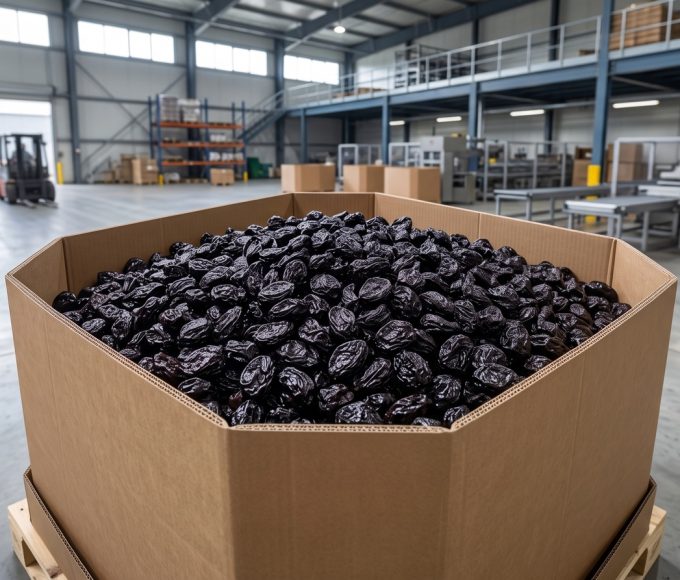
The government's goal is to achieve the 500,000 tons of fresh fruit by 2035. A significant portion of this production is destined for fresh summer consumption in China's megacities, but the surplus volume is rapidly fueling a local dehydration industry with state-of-the-art industrial ovens.
Jiashi's rapid growth confirms Portal Ciruelas' central thesis: the Chinese market for bulk and medium-sized plums will shrink dramatically in the next 24 to 36 months as domestic supply gains volume and logistical competitiveness.
Implications for South America: from strategic partner to alternative supplier.
Jiashi's infrastructure is not merely a case of domestic production scale. It represents a geopolitical reconfiguration of the global fruit trade.
Until now, South America operated as China's natural counter-season: while the northern hemisphere closed its plum season in September, Chile covered the February-March window, supplying the Chinese market during a period when domestic production was non-existent.
That role is eroding along two simultaneous axes:
First, Volume self-sufficiency. With 38,000 hectares in Jiashi, a national total exceeding 70,000 hectares, and a target of 500,000 tons of fresh produce by 2035, China is structurally reducing its dependence on imports during the regular season.
Second —and more importantly— extended storage capacity. Jiashi's cold chain system allows harvested fruit to be sold from a natural window of 10-20 days to up to 2-6 months outside of its natural season. This means that fruit from August-September can continue to supply the Chinese market in February-March, which was precisely the window where South America had a competitive advantage.
The risk for South American players is that Beijing will begin using its accumulated domestic volume as leverage in negotiations during the off-season. The February-March window ceases to be complementary and becomes undisputed territory—or disputed on increasingly unfavorable terms for the southern exporter.
Strategic judgment does not depend on China succeeding in replacing 100% of its imports. It is enough for it to approach a level of self-sufficiency that allows it to say, at the negotiating table: «"I don't need you — or I need you less."»
The real question is what bargaining power the South American exporter will retain when China can cover its own demand in the window where it previously had no alternative.
The implication for South America is not a question of "whether China will stop ordering," but of "how much room for negotiation will be left for those who continue selling.".
The state plan to 2035 and the participation of 18 state corporate conglomerates reflect the priority assigned to this project, positioned not only as an economic engine for regional development but also as a strategic tool for import substitution.
1. View China as a market, not just as competition.
Xinjiang's production expansion may increase local supply, but it is also developing infrastructure, distribution, and consumption. The strategy should focus on identifying opportunities for imported plums.
2. Defend the off-season periods.
South America's advantage will not be competing with Xinjiang when both have product available, but rather entering the Chinese market when local supply decreases or changes in quality. The opportunity lies in the timing.
3. Invest in quality and differentiation.
If China significantly increases its production, competing solely on price will become increasingly difficult. Size, condition, flavor, post-harvest life, presentation, and traceability will have to become key selling points.
4. Build business relationships before you need them.
Importers, distributors, and large Chinese chains should begin incorporating themselves into the commercial strategy early on. Having an established distribution channel will be an advantage when local supply increases.
5. Closely monitor Chinese logistics.
The real change isn't just in the planted hectares: China is developing a rail and logistics infrastructure that connects productive regions with major consumption centers. Xinjiang already has a rail network integrated into the main national corridors.
6. Think of China as a long-term market.
The response should not be to retreat from the expansion of Xinjiang, but to anticipate it: to understand varieties, market opportunities, prices, formats, and preferences of the Chinese consumer.
Xinjiang's railway infrastructure is changing the rules of the fruit game in Asia; South America must respond with added value and business acumen. The time to react will not be when Xinjiang reaches its full production potential. It will be now, while the distribution of the Asian market is still being defined.
Report prepared by the Portal Ciruelas team using data and market intelligence.
Sources: 经济日报 (Qiao Wenhui, May 17, 2026), 农民日报 (August 13, 2025), 中国网 / 中国日报 (July 13, 2026), 南方+ (August 2025 — 48 hours express).



 Spanish
  English
  Chinese


Leave a comment