




USA.
California's shield: a stable harvest of 68,000 tons and a balanced supply to sustain firm prices.
Technical management in the orchard: strategic thinning and early harvesting
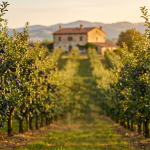
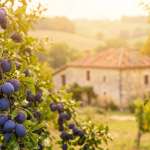
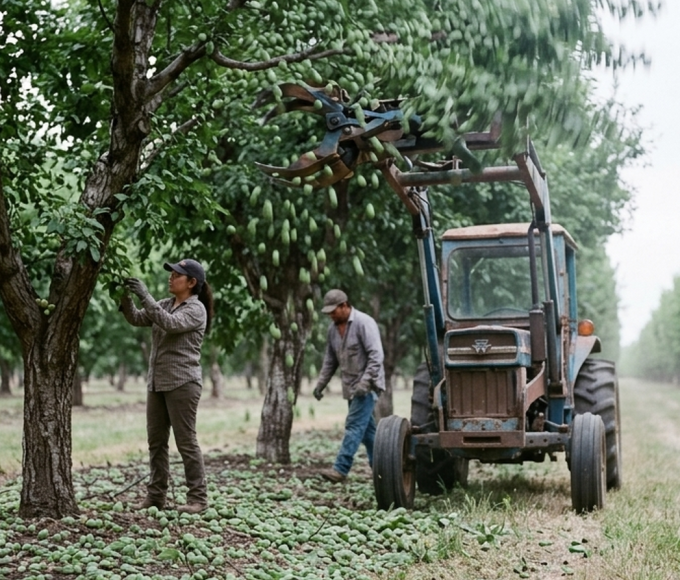
The consistent yield is not a matter of chance. Maintaining Californian volume requires meticulous management. During the flowering period in early March, temperatures hovered around 80°F (26.6°C), the threshold where extreme heat ruins fruit set. However, the rise in temperatures at the beginning of June led many growers to intensify intensive mechanical thinning.shaker thinning) with the aim of regulating the excessive load on the trees and ensuring medium to large sizes, which are what the value market seeks.
With approximately 37,000 productive acres (roughly 15,000 hectares), the renewal of older orchards is ongoing to ensure their continued vitality. This season, the harvest is expected to begin a week earlier than usual, officially starting in mid-August. Growers are already calibrating equipment and preparing drying facilities to receive the fruit with optimal sugar and firmness levels.
| CALIFORNIA BUSINESS STRATEGY | Worth | |
|---|---|---|
| Domestic market | 60% | |
| Exports | 40% | |
| Export destinations | More than 60 countries | |
| Priority market | Japan | |
| Growth markets | Vietnam, Singapore, Thailand and the Philippines |
The drying tunnel as a pillar of quality and consistency
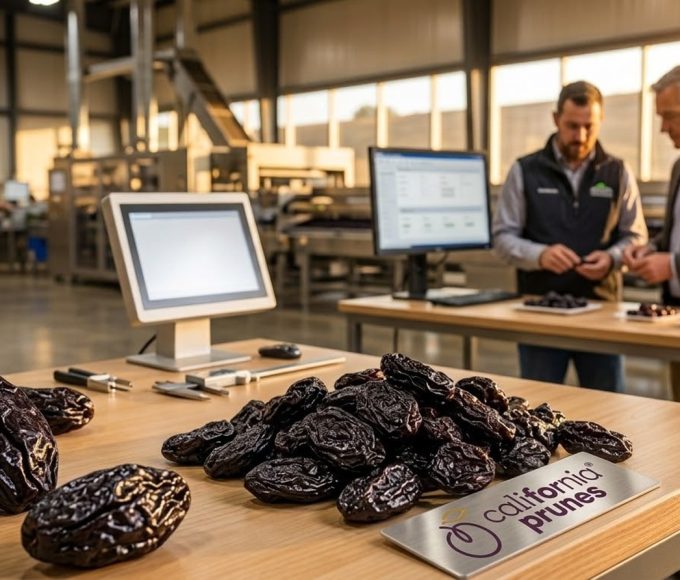
While other origins rely on sunshine and assume the risks of climate or contamination, the Californian industry maintains a non-negotiable policy: the 100% of harvested fruit passes through controlled-flow tunnel dryers. This industrial process, which requires about 18 hours at a constant temperature of 180°F (82°C), guarantees uniform moisture and optimal texture that does not vary according to the weather during the harvest season.
This investment in infrastructure allows us to offer a homogeneous product year-round, avoiding the urgency of liquidating bulk stock at fire-sale prices. As we analyzed in [The end of the bulk business: The Chinese oversupply, the climate crisis and the new rules of the IPA 2026](https://portalciruelas.com/2026/05/28/el-fin-del-negocio-a-granel-la-sobreoferta-china-el-quiebre-climatico-y-las-nuevas-reglas-del-ipa-2026/), the mechanization of drying and the abandonment of the natural plum with low-quality pit represent the only solid defense against global commoditization.
California operates under some of the world's most stringent labor and environmental regulations. Added to this is the impact of global energy inflation, which increases the operating costs of drying tunnels. The sector is forced to offset these costs with extreme efficiency and the integration of renewable energy sources (solar and cogeneration), without ever compromising its premium quality standards.
Market segmentation: the explicit renunciation of low price
California's business strategy is clear: 601,330 pounds of its production is destined for the domestic market, where the consumption of healthy snacks and industrial ingredients sustains demand. The remaining 401,330 pounds is exported to more than 60 countries, but the Plum Board focuses its promotional resources exclusively on high-value niches.
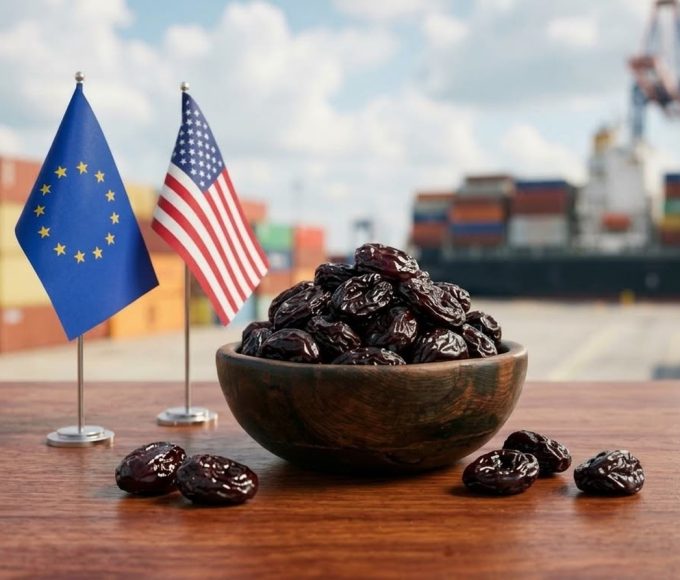
Japan remains the top destination, accounting for over 901% of exports (9 out of every 10 dried plums imported into Japan come from California). Europe continues to be a significant market for California, benefiting from favorable trade conditions for U.S. exports of plums, juices, and concentrates. Instead of competing in high-volume, low-margin markets like India—where barriers to entry and marketing costs are prohibitive—the U.S. industry is targeting Southeast Asia (Vietnam, Singapore, Thailand, and the Philippines), seeking to capitalize on the growing middle class that demands functional foods with scientifically proven bone and digestive health benefits.
This approach ratifies the concepts discussed in [Value Leadership: The Next Phase of Global Industry from a California Perspective](https://portalciruelas.com/2026/04/15/liderazgo-en-valor-la-proxima-fase-de-la-industria-global-segun-la-perspectiva-de-california/), where it is highlighted that competing solely on volume in the face of the emergence of new players like China is a "race to the bottom" that destroys the producer's profitability.
- **Do not accept price drops:** California's firm prices demonstrate that premium buyers are willing to pay for quality and consistency of supply.
- **Prioritize the value market:** The growth of the middle classes in Southeast Asia opens opportunities for exporters offering ready-to-eat products (tenderized and pitted) instead of bulk.
- **Invest in differentiation:** Scientific research on the nutritional benefits of plums is the most effective tool to sustain long-term demand.
California's strategy for this season combines a stable supply, investments in quality, and marketing focused on added value. In a context of high costs and low global stocks, the sector is committed to maintaining a balanced market rather than competing through price reductions.
Source: Prepared by Portal Ciruelas based on the interview with Donn Zea (California Prune Board) published by Mundus Agri, supplemented with our own analysis.



 Spanish
 English
 Chinese


Leave a comment