






[CHILE · SUSTAINABILITY]
FROM COMMODITY TO AUDITED FRUIT: How Chile's 135 goals are redefining the global plum business.
From the green narrative to the technical audit: the 28-month roadmap
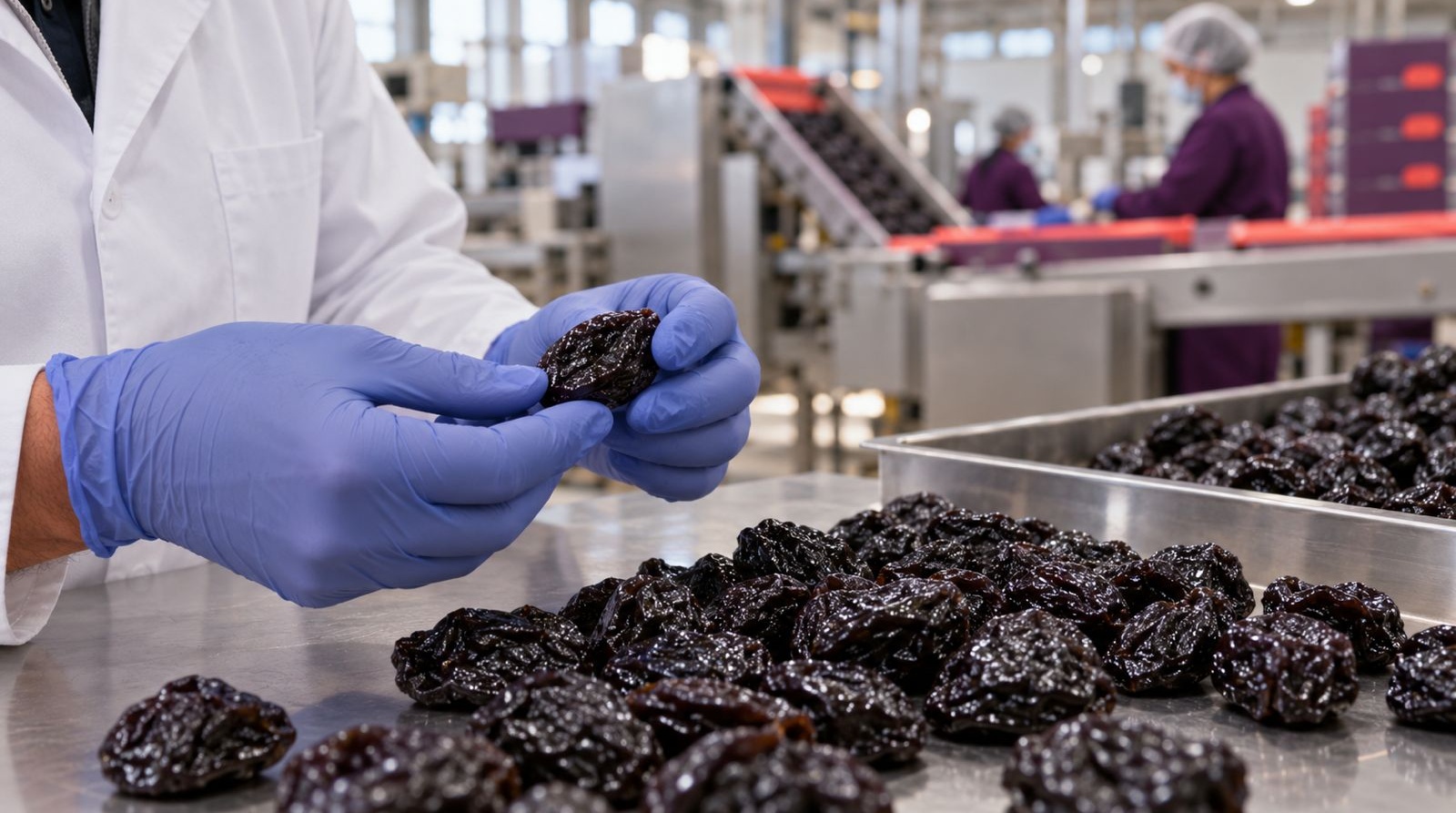
The international dried plum market has entered a phase where intangible quality attributes are no longer sufficient to sustain prices or secure long-term contracts. Following 28 months of coordinated work led by Chileprunes, the Chilean industry completed the core design phase of its Sustainability Standard, becoming the first origin globally to formalize a tailored sector standard for processed and dried fruit.
The initiative, structured through a Clean Production Agreement (CPA) with the Sustainability and Climate Change Agency (ASCC), the Office of Agricultural Studies and Policies (ODEPA) and the Foundation for Agricultural Innovation (FIA), involved more than 600 actors including primary producers, processing plants and technical organizations.
The scheme is not merely a statement of good intentions. It is an operational manual of 135 auditable goals that will enable participating companies to certify under the official "Chile Conscious Origin" (ChOC) seal. The strategic objective is to safeguard the competitiveness of the largest exporter in the Southern Hemisphere against the due diligence requirements currently applied by major supermarket chains in the European Union, the United Kingdom, and high-value Asian markets.
|
Phase 1 (Months 1-12)
Governance mapping, prioritization of areas and technical drafting of the 135 actions
|
Phase 2 (Months 13-18)
Pilot diagnostic audits in orchards and drying/tenderizing plants
|
Phase 3 (Months 19-24)
Technical training for middle management and implementation of APL protocols
|
Phase 4 (Months 25-28)
Final external audit, validation and delivery of ChOC certifications
|
The 12 critical areas that international buyers will audit
The standard covers twelve key themes that encompass the entire business cycle, from on-farm irrigation management to final packaging at the plant. Among the most critical aspects for B2B buyers are water efficiency, greenhouse gas (GHG) emissions, the energy matrix of dehydration tunnels, comprehensive industrial waste management, and the working conditions and safety of operators.
In destination markets, regulatory pressure no longer distinguishes between fresh and processed produce. With the implementation of European regulations on Corporate Sustainability Reporting (CSRD) and due diligence directives on deforestation and human rights, importers need to extend this traceability backward in their supply chain. Those without standardized indicators of water consumption per kilogram of dried fruit or concrete decarbonization plans for the drying process will be relegated to secondary channels with lower returns.
On the other hand, the incorporation of advanced safety protocols and due diligence prevents phytosanitary observations at a time when tolerances for residues and contaminants at destination are becoming increasingly strict.
European supermarket chains' purchasing programs are cutting suppliers that cannot certify Scope 3 metrics (indirect emissions and water footprint). The Chilean sector standard seeks to neutralize this risk before it becomes a hidden tariff barrier.
What reading should the international control panel make?
The consolidation of a sector-wide standard in Chile marks a turning point in trade dynamics among different exporting countries. While emerging competitors from Central Asia, such as Uzbekistan, continue to compete primarily on volume and cost in price-driven markets, established countries must reaffirm their leadership through technical sophistication and risk mitigation for importers.
For packers and exporters from other origins, such as Argentina, France, and California, the Chilean experience offers a glimpse into the landscape where premium tenders will be contested from 2026 onward. Having large sizes and high-quality, tender fruit will remain the foundation of the business, but the ability to deliver fruit certified under comparable ESG standards will be the key to unlocking multi-year contracts with protected margins.
The public-private integration observed in this process also demonstrates that the cost of developing environmental metrics cannot fall exclusively on the individual producer: it requires strong trade association structures that negotiate financing programs and technical validation before states and multilateral organizations.
- **Producers and packers in Chile:** Begin internal self-assessment against the 135 actions of the standard to take advantage of the pilot audits and access the ChOC seal before it is contractually required.
- **Global exporters and marketers:** Incorporate sustainability and footprint metrics as a selling point in international negotiation rounds, differentiating audited fruit from unsupported commodities.
- **Industries of other origins (Argentina, USA, Europe):** Monitor the homologation of these standards in European retail to assess whether their current schemes (GlobalGAP, SMETA) cover the demands of Scope 3 or whether they will require their own sectoral agreements.
The professionalization of the global dried plum supply is progressing steadily. Sustainability has moved beyond a corporate brochure to become an agronomic and industrial engineering protocol that redefines who can operate at the forefront of global trade.


 Spanish
  English
  Chinese


Leave a comment