




[FRANCE · EXPORT]
Europe removes the 9.6% tariff on US plums: Agen on a war footing and the global chessboard is being reconfigured
The end of a historical barrier and the unrest in Lot-et-Garonne
The EU decision came as a shock to southwestern France. Since July 1st, dried plums from the United States have entered the European Union market completely duty-free, eliminating the historical 9.61% tariff that previously applied to direct shipments. The measure, agreed upon between Brussels and Washington without prior consultation with agricultural organizations, has raised concerns at the French National Interprofessional Office for Prunes (BIP).
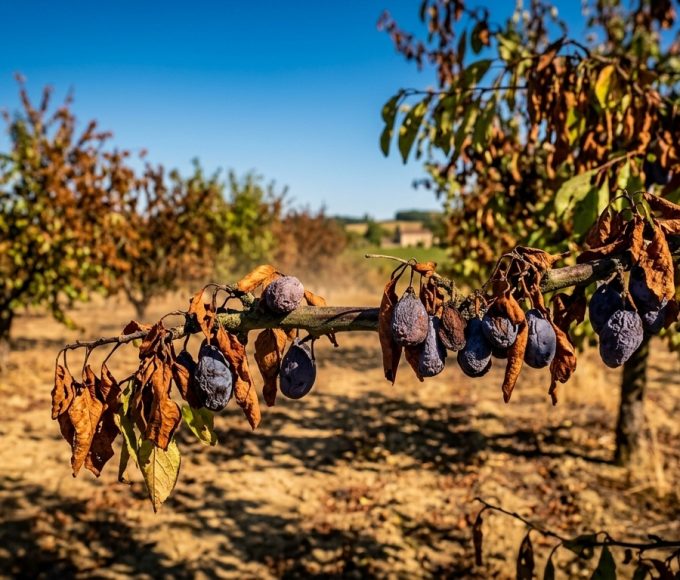
For French farmers and packers, who defend the Protected Geographical Indication (PGI) seal Pruneaux d'Agen, The news comes amid a series of challenging campaigns marked by heat waves and a sharp rise in energy costs for industrial drying. The regulatory body reported learning of the price reduction through its own processing clients, accusing authorities of having "sacrificed" the regional economy for broader geopolitical agreements involving sectors such as wine, aerospace, and the automotive industry.
The shift is significant in volume. Between 2020 and 2025, the United States exported an average of 7,675 metric tons annually to the European Union and the United Kingdom. By removing the tax barrier, the Californian industry gains immediate leverage to reposition fruit in the higher-value European market, competing directly against domestic EU supply.
| Import tariff in the European Union for dried plums | Worth | Scale |
|---|---|---|
| United States (new regime) | 0% | |
| Chile (zero tariff since 2003) | 0% | |
| Argentina (EU-Mercosur tariff reduction, initial year) | 7,7% | |
| Third countries without agreement (general MFN tariff) | 9,6% |
Health asymmetry and rehydration: the core of the technical dispute
Agen's complaint goes beyond mere customs revenue and targets the heart of profitability: operating costs and phytosanitary gaps. EU producers denounce the environmental requirements of the Common Agricultural Policy (CAP) and the European strategy. Farm to Fork They are constantly making the management of their orchards more expensive, while the bloc opens its doors to competitors who operate under much more flexible regulations.
According to BIP's technical surveys, 52 insecticide molecules and 35 fungicide molecules authorized in Chile are strictly prohibited in France. In Argentina, the gap extends to 48 insecticides and 37 fungicides that lack approval within the EU. While the United States maintains rigorous traceability systems to comply with Maximum Residue Limits (MRLs), California's economies of scale, mechanization, and financing capabilities generate a cost differential per kilogram that is difficult for the 10,000 direct and indirect jobs supported by the French industry to absorb.
Adding to this scenario is a long-standing trade friction: triangulation at the point of origin. A significant portion of imported plums enter European processing plants in their natural, dried state, where they undergo softening, pitting, or the production of derivatives such as purees and jams. When packaged at their destination, these products often display EU flags on the front of the packaging, relegating the country of origin to small print on the back label.
France has banned dozens of active ingredients approved in the Americas, but its processors and supermarkets now have access to Californian fruit without additional taxes. With the market open to Chile, the United States, and the gradual incorporation of Argentina, local plums are losing pricing power in distribution chains in central and northern Europe.
Board reconfiguration: what it means for each player
The new tax scheme alters the balance of power in European ports. As we analyzed in our report on the Mercosur-European Union agreement, the bloc was already undergoing a phased tariff liberalization for South American origins, with Argentina gradually moving from 9.61% to free trade.
However, California will not wait for the five-year tariff reduction schedule: it already has direct access to the 0%, matching the advantages that Chile has enjoyed since 2003. For US exporters, Europe represents a priority destination with high demand for medium and large pitted sizes (pitted), allowing them to decongest inventories without having to validate the aggressive discounts that Southeast Asia or the Middle East demand today.
For the rest of the supplier and processing countries, the move redefines trade flows towards traditional markets such as Germany, Italy, Spain and the Netherlands, where industrial buyers will have broader and more aggressively priced supply alternatives.
- **For overseas exporters (South America and the USA):** Tariff parity or lower rates in the EU do not guarantee fixed volume on their own; the European market will increase the monitoring of chemical residues and require ethical certifications and carbon footprint as alternative non-tariff barriers.
- **For the European packing and rehydration industry:** A strategic window of multi-origin supply at a lower tax cost is consolidated, which incentivizes the import of bulk raw materials to add local value in pitting and packaging.
- **For the European producer of fruit of origin:** Trade defense can no longer rely on customs tariffs; quota survival requires protecting the differentiation of the PGI seal, strengthening traceability of origin in contracts with distribution chains, and accelerating harvest mechanization to cut structural costs.
The elimination of tariffs on US plums confirms an irreversible trade reality: traditional customs protectionism is fading in the world's major importing markets. The real battle in the coming years will not be fought at customs checkpoints, but rather in the consistency of analytical standards, the industrial efficiency of packaging, and the capacity of each origin to offer value-added sizes in a market where low-cost fruit circulates freely.
Source: La Dépeche Newspaper. Market analysis prepared by the Portal Ciruelas team.




 Spanish
 English
 Chinese


Leave a comment