






[CHILE · EXPORT]
CHILE PROJECTS TO EXCEED 500 TONS IN INDIA BY 2027: The race to open the largest virgin market.
The change in phytosanitary protocol and the educational career
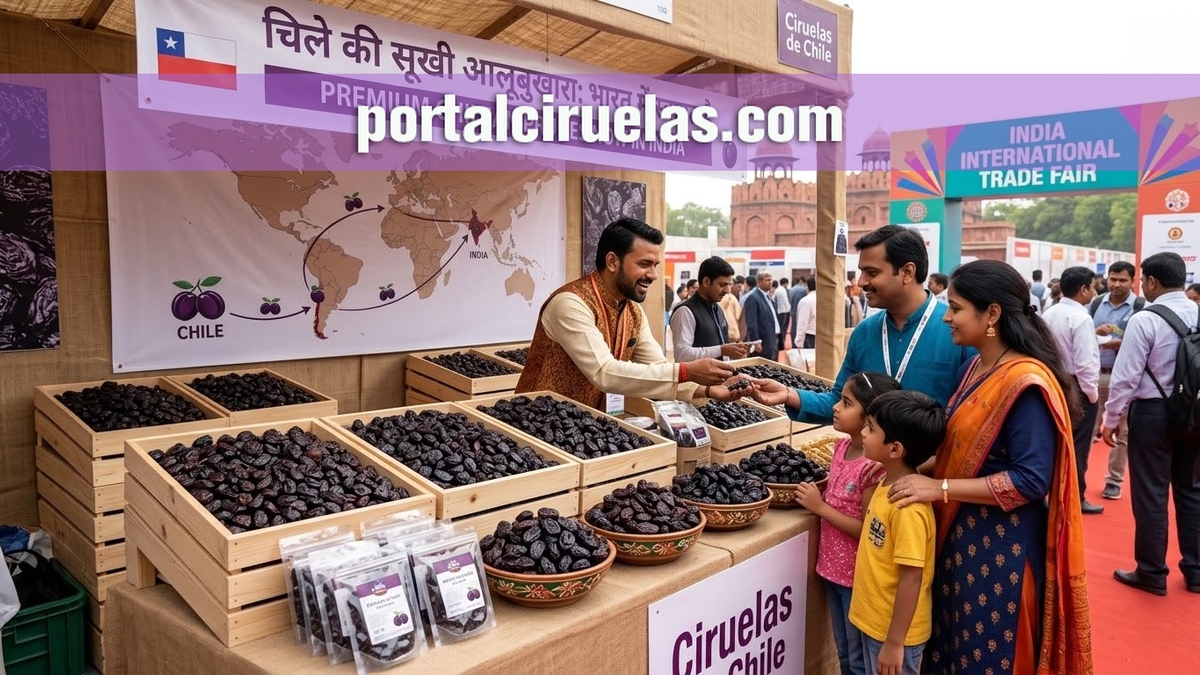
The Indian market remained closed to Chilean prune plums until mid-2023. The resolution of the phytosanitary barrier opened up a market of over 1.4 billion people, but immediately revealed a fundamental commercial challenge: unlike walnuts or raisins, prunes lacked a presence in the local daily diet. The strategy led by Chileprunes in conjunction with ProChile didn't begin by pushing for higher prices or massive volumes, but rather by establishing a foundation for consumption through campaigns focused on digestive health, the medical-nutritional channel, and adaptation to vegetarian preparations.
Looking at the raw numbers, Chilean exports to that destination jumped by 4,001 tons between 2023 and 2026. However, in the export business, caution is key: when the initial statistical base is practically nonexistent, any small number of containers can distort the relative percentages. The goal of breaking the 500-ton mark by 2027 reflects a gradual approach that aims to engage more than seven importers and exceed 40 active distributors, expanding coverage beyond Mumbai and New Delhi to secondary urban centers.
|
2023
Official phytosanitary opening for tenderized plums
|
2024
Deployment of B2B campaigns with prescribers and trade fairs
|
2026
Jump of the 400% in cumulative volume from baseline zero
|
2027
Projection: 500+ tons, 7 key importers and 40 distributors
|
Packaging logistics: the industrial format as the key to entry
Selling ready-to-eat plums in India faces challenges such as tariffs, freight costs, and fragmented distribution networks. Therefore, the model gaining traction relies on shipping softened fruit in bulk or in 10-kilo boxes. This system allows local packers to receive the fruit and repackage it into bags. stand-up pouch or snack formats of 300, 400 and 500 grams, alone or combined with nuts such as almonds, cashews and apricots, categories already rooted in Indian culture.
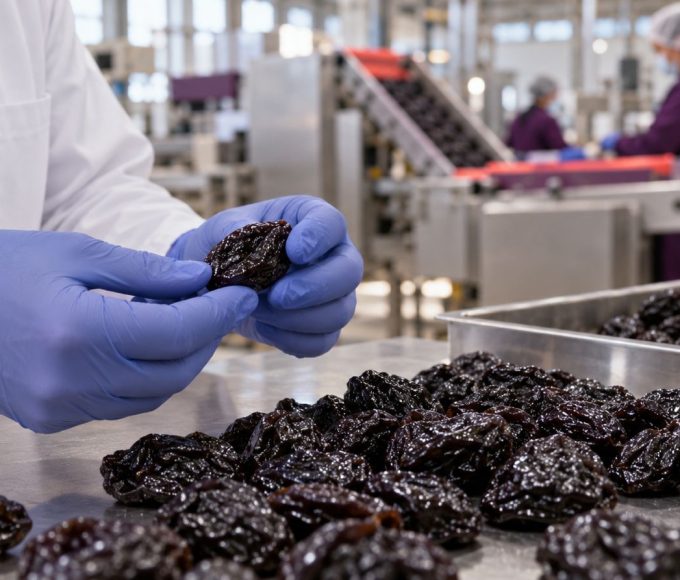
For the global processor and exporter, this dynamic redefines product specifications. It demands strict standards for moisture and preservatives to withstand ocean voyages and subsequent handling in hot, humid climates without losing texture or developing mold. It also consolidates the demand for medium sizes and industrial blends that do not always find easy placement in Western markets for large-sized, pitted avocados.pitted), easing inventory balances at the source.
Calculating potential demand by multiplying tons by population is usually disastrous. India doesn't buy plums due to cultural inertia. If B2B transfer and tasting programs slow down, the product stagnates in wholesale warehouses. Turnover depends entirely on sustaining coordinated promotional efforts at trade shows like MEWA and validation through modern retail channels and e-commerce.
Surface expansion and Asian clock pressure
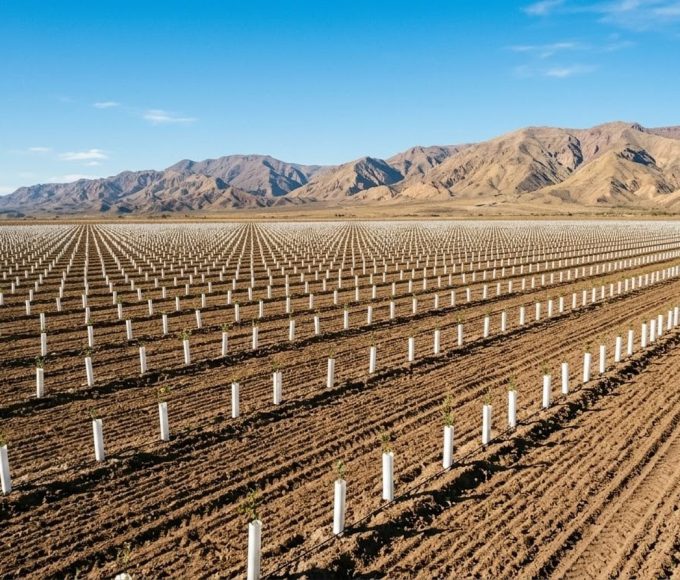
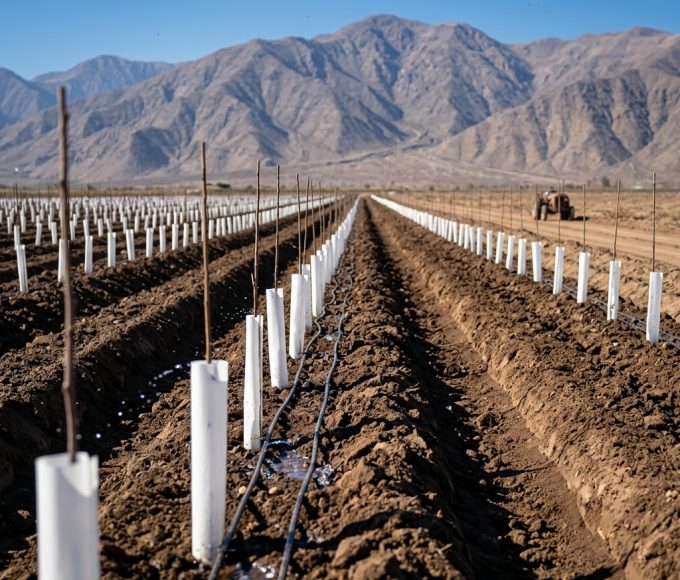
Chile's expansion into India is not an isolated phenomenon; it responds to a structural need for geographic diversification. Currently, China absorbs approximately one-third of Chile's plum exports, Europe maintains its historical importance, and the United States and Mexico serve as complementary markets. Meanwhile, the planted area in Chile is projected to increase from the current 13,000–14,000 hectares to nearly 16,000 hectares by 2030, driven by developments in the Maule, Ñuble, and O'Higgins regions, with average yields that are double the productivity per hectare of other global competitors.
With such a large volume entering the market in the coming years, excessive dependence on Beijing represents a major commercial risk, especially considering the expansion of plantations and industrialization in Xinjiang. For exporters anywhere in the world—whether operating from South America, California, or Eastern Europe—secureing markets like India, Vietnam, the Philippines, Indonesia, and Thailand is the only way to prevent surpluses from driving down international prices for culls and medium-sized fruit.
- **Monitor the elasticity of the bulk format:** Evaluate selling in 10 kg industrial boxes to local Asian packers instead of forcing final consumer packaging from the source.
- **Diversify the portfolio outside of China:** Allocate systematic exploratory volume quotas to emerging destinations to avoid exposure to regulatory closures or drops in demand in mature markets.
- **Adapting the commercial message to functional use:** In markets without a culinary tradition of plums, B2B sales thrive driven by arguments of gastrointestinal health, vegan applications and technical prescription.
- **Adjust humidity and preservation protocols:** Exporting to monsoon climates demands rigorous technical tolerances to ensure shelf life after secondary fractionation.
The Chilean experience in India sets the course for the entire international dried fruit market: opening sanitary borders is just the first administrative step; the real return on investment is built by teaching a market that has never had plums on its table how to process, package, and eat them.
 Spanish
 English
 Chinese


Leave a comment