




[USA]
#LA EUROPEAN UNION ENFORCES THE 0% TARIFF FOR US PLUMS: Reconfiguration of the global chessboard.
The European Council concludes tariff negotiations with Washington.
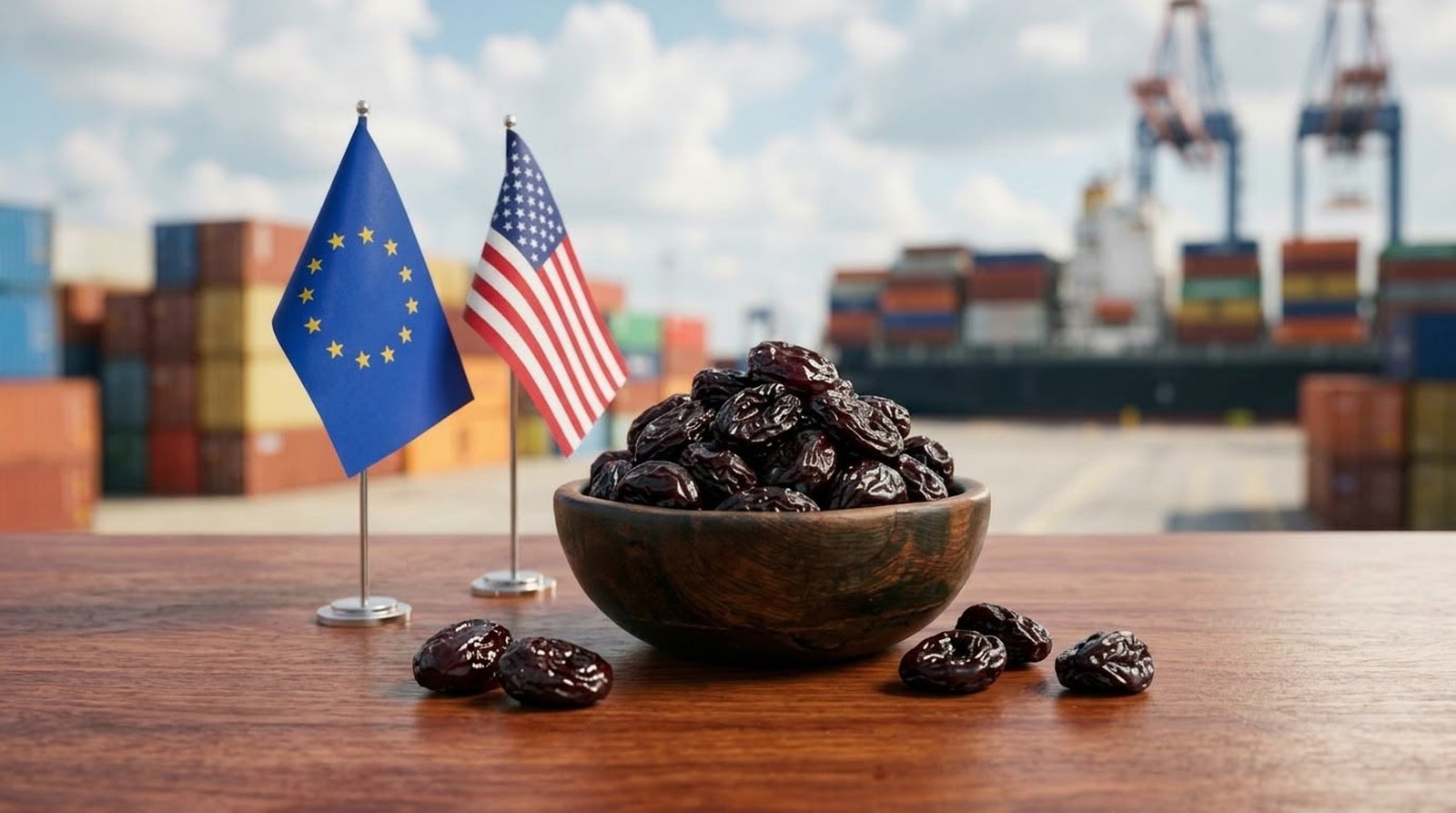
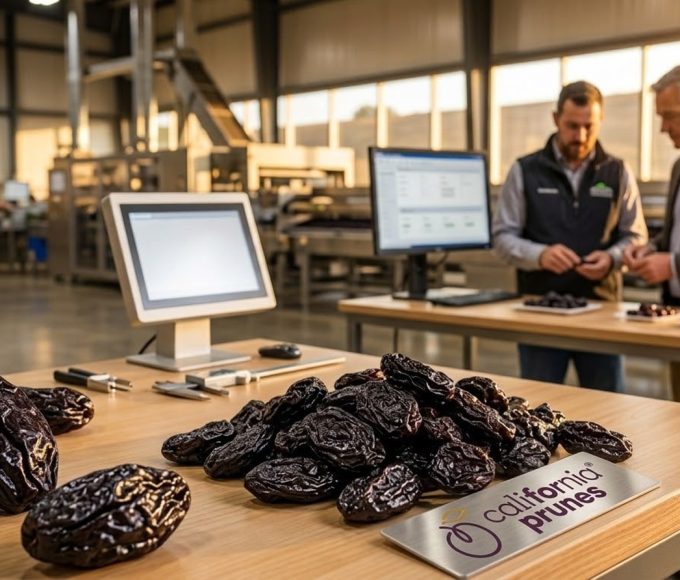
The Council of the European Union formalized the adoption of its new tariff regulation, a decision that structurally modifies the access conditions for dried fruit of US origin. Within the package published in the Official Journal of the European Union, tariff heading 0813 20 00—corresponding to dried plums—is formally consolidated with a tariff of 0%. The resolution dismantles the historical barriers that burdened shipments from California to the bloc's ports.
The measure is not isolated. It is part of a broader effort that includes the indefinite extension and updating of EU tariff schemes, incorporating specific quotas for in-shell and processed nuts, and liberalizing tariffs on raisins, apricots, and dried cranberries. For processors and packers in Yuba City or California's Central Valley, this legislative confirmation represents a return to net tariff parity in one of the most demanding and affluent markets in the world.
| Customs tariffs for entry into the European Union by origin (2026/2027) | Worth | Scale |
|---|---|---|
| United States (EU Regulation formalized) | 0% | |
| Chile (Modernized Trade Agreement) | 0% | |
| Mercosur / Argentina (Base year for tariff reduction schedule) | 7,7% | |
| Third countries without agreement (Historical MFN tariff) | 9,6% |
Impact on the origins: from the Southern Cone to Pruneau d'Agen.
Until this ruling, Chilean exporters enjoyed the exclusive advantage of preferential tariffs in Europe, while Californian production had to absorb or pass on the residual Most Favored Nation (MFN) tariff of 9.61% TP3T. With this formal elimination, California regains direct competitiveness on supermarket shelves and in the European processing industry (Germany, the United Kingdom, the Netherlands, and Italy), neutralizing the tariff gap with Santiago.
For Mercosur, the measure introduces unavoidable temporary pressure. As we analyzed in [Mercosur-European Union Agreement: lower tariffs and greater competitiveness for Argentine plums in Europe](https://portalciruelas.com/2026/05/12/acuerdo-mercosur-union-europea-menos-aranceles-y-mas-competitividad-para-la-ciruela-argentina-en-europa/South American production operating under the bi-regional agreement began a gradual tariff reduction, lowering the historical tariff from 9.61% to 7.71%, with a five-year phase-out period. During this transition period, processed fruit from the United States will enter European factories with a tariff advantage of $77 per $1,000 FOB compared to its Mercosur counterparts.
In the European domestic market, processors in Agen, France, have mixed reactions to the news. On the one hand, local cooperatives see a long-standing rival in the large-size fruit market consolidating its position. On the other hand, European re-packers who blend and process imported fruit for private labels are assured a continuous supply of medium-sized fruit and high-density pulp without customs penalties.
California immediately enters with 0% in position 0813 20 00. Origins that are still going through multi-year tariff reduction schedules will have to compensate for that difference with lower operating costs or greater industrial differentiation in the value added per kilo.
The clash in the premium segment: large calibers and pitted.
The global plum market is at a pivotal moment. While China is consolidating thousands of new hectares in Xinjiang, geared towards domestic consumption and the sale of surplus stock in Central Asia, the bulk stone plum market is heading towards relentless commoditization. In this context, Europe is reaffirming itself as the market where margins are defended through sizes 30/40, 40/50 and tenderized pitted fruit.pitted).
California has been experiencing a decline in planted area over the last two decades, prioritizing highly technological orchards, carbon footprint traceability, and top-tier phytosanitary certifications. With the zero tariff formalized by Brussels, US processors will not compete in the low-price segment: they will supply directly to importers of functional ingredients and the large European retail chains that demand zero tolerance for stone fragments.pits) and BRC or IFS certifications with the highest scores.
This move forces global packers to redefine their FOB price lists. If the tariff no longer protects or penalizes California asymmetrically compared to Chile, the decisive factor in purchasing in Rotterdam or Hamburg will depend exclusively on three variables: the cost of ocean freight, uniformity of sizes, and homogeneity in the moisture content of the tenderized product.
- **Monitor FOB price parity in Europe:** Recalculate net CIF delivery margins at Northern European ports considering the elimination of tariffs for North American supply.
- **Secure contracts on technical specifications:** Against a competitor with zero tariffs and a high reputation in defect control, consistency in moisture percentage and the absence of pit fragments cease to be a differentiator and become an entry condition.
- **Accelerate sustainability certification:** Take advantage of off-season production costs to close annual programs before the start of the northern hemisphere harvest, integrating certified carbon footprint measurements.
The European Union's formalization of the regulation completes the trade landscape, where tariff barriers are no longer the primary shield in the market with the highest unit value. From now on, those competing for the European consumer will have to do so with pure logistical efficiency and industrial quality standards that can withstand direct comparison with the Californian benchmark.


 Spanish
  English
  Chinese


Leave a comment