




Huajie Variety No. 1: China's new plum variety that brings forward the harvest to July
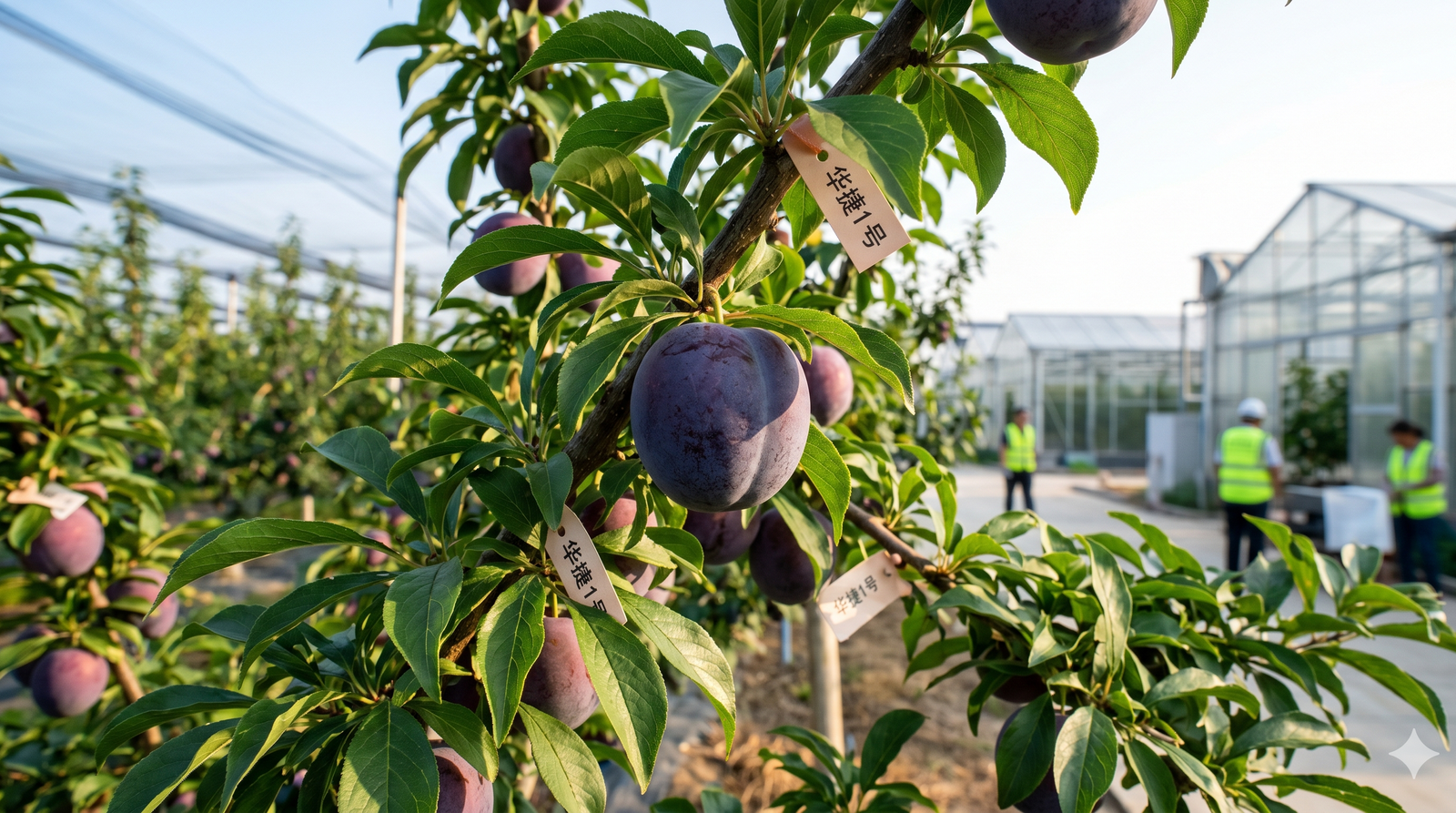
One of the most relevant technical data points presented during the 2026 International Prune Association (IPA) Congress went almost unnoticed by most commercial operators. The Asian delegation formally presented the Huajie No.1, marking a structural milestone: the first plum variety with exclusively Chinese genetics and intellectual property.
This launch is not a simple agronomic advance; it is a tactical move designed to redraw the global supply calendar and capture the value of scarcity trading windows.
Technical specifications: Beijing's genetic missile
The Huajie No. 1 was designed with clear volume and timing objectives. The data presented reveals a highly efficient variety:
- Harvest: Mid to late July.
- Caliber: 45 to 55 grams on average.
- Performance: 15 to 22.5 tons per hectare.
Beijing's stated goal with this variety is to fill the summer supply gap in Asia, a space that has historically been a haven for high-margin imported fruit.
The end of the counter-season for South America
The commercial impact for countries like Chile and Argentina is direct and severe. Historically, the Southern Cone shipped its stored fruit (either fresh or dried early harvest) to Chinese ports during July, capitalizing on premium prices due to scarcity before the start of the large Xinjiang harvest.
With the introduction of Huajie No. 1 in volume, the shortage in July ceased to exist.
The South American exporter who manages to position fruit in China during the month of July will no longer be competing against shortages, but will have to fight for price against a newly harvested local first.
|
July
Huajie No. 1 (China, early first)
|
August
Richard (China, massive volume of 45 t/ha)
|
August / September
French Prune (USA) and D'Agen (France)
|
February / April
D'Agen Harvest (Chile / Argentina)
|
Inaction in the face of innovation
The threat posed by Huajie No. 1 exposes a deeper crisis in the Southern Hemisphere: genetic stagnation. While Asia invests state resources in patenting genetics designed to neutralize its competitors, South America continues to massively clone the same D'Agen variety that it has been doing for decades.
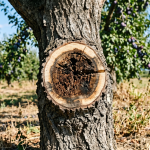
Adding to this scenario is the aging of the production fleet. France recently reported orchards with an average age of 26 years, while the situation is similar in other countries. Reports from UC Davis demonstrated that older orchards (over 13 years) suffer yield losses of up to 431% due to wood diseases such as fungus. Phellinus.
Competing in the next decade with an aging biological matrix, which performs half as well as its Asian counterparts, is a race towards loss of profitability.
- **Varietal Audit of the Orchard:** Review the actual yield of blocks older than 15 years. If the orchard does not exceed 20 t/ha or achieve large fruit sizes, it is economically unviable compared to the new Chinese scale. It must be eradicated.
- **Fund improvement programs:** Technical managers and exporters should collaborate with INTA, INIA and nursery consortia in the development of new early or extra-late local genetics.
- **A brake on default planting:** Re-evaluate which genetics to plant before sinking CAPEX (Capital Expenditure – Capital investment spending that a producer allocates to acquire, maintain or improve long-term physical assets) into nets or drip irrigation for new hectares of standard varieties.


 Spanish
  English
  Chinese


Leave a comment