




[CHILE · MARKETS]
THE 16,500 HECTARE DILEMMA: Why projecting returns of US$$ 2 per kilo threatens the plum sector?
The mirage of record returns and the barrier of nurseries.
The last five years have marked an exceptional cycle for Chilean dried plums, with returns to producers averaging US$2.20/kg for 70 units per pound. In a scenario where the cherry business is suffering from uprooting due to market saturation, many operators are looking to European plums as a safe haven for profitability.
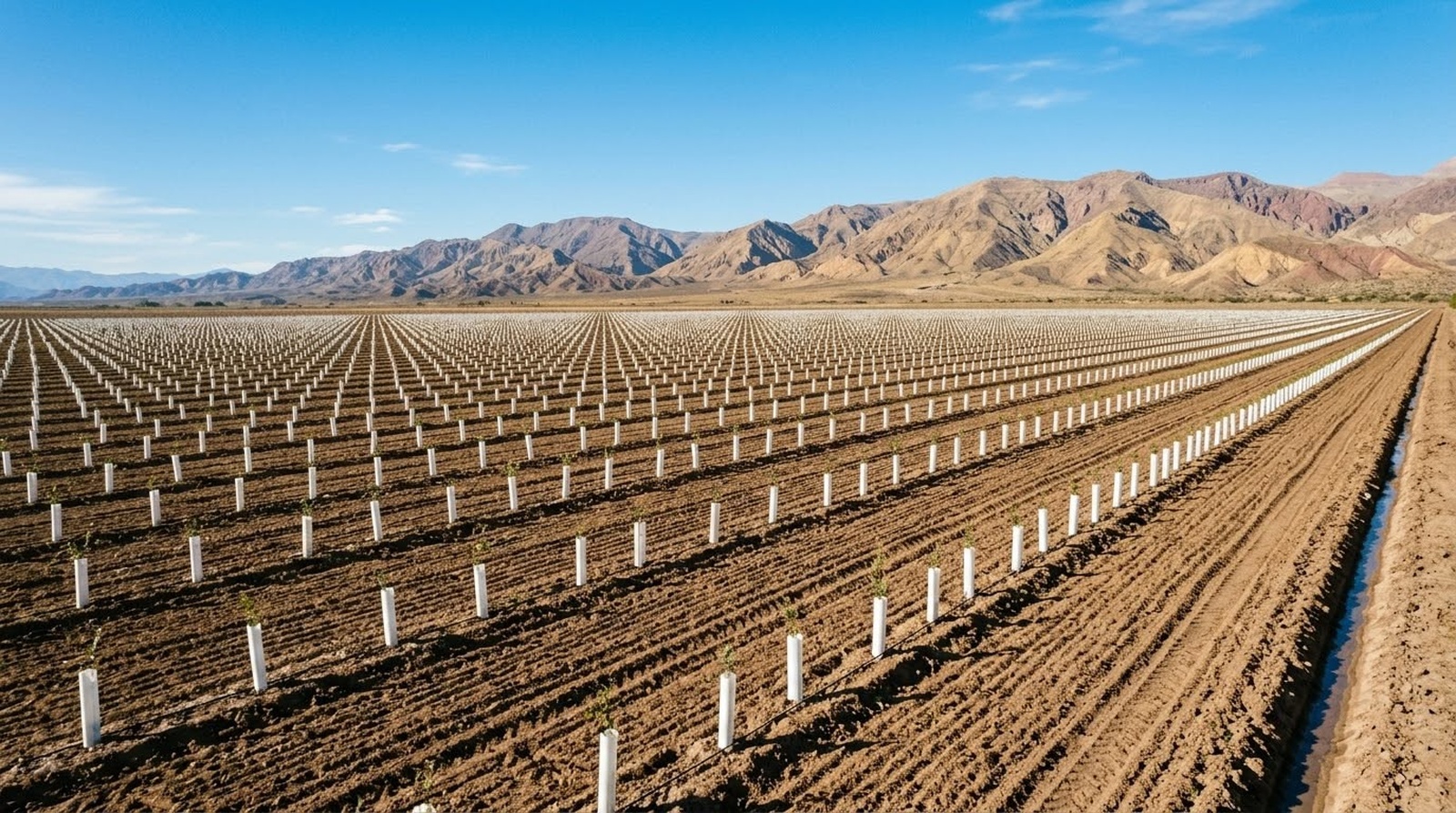
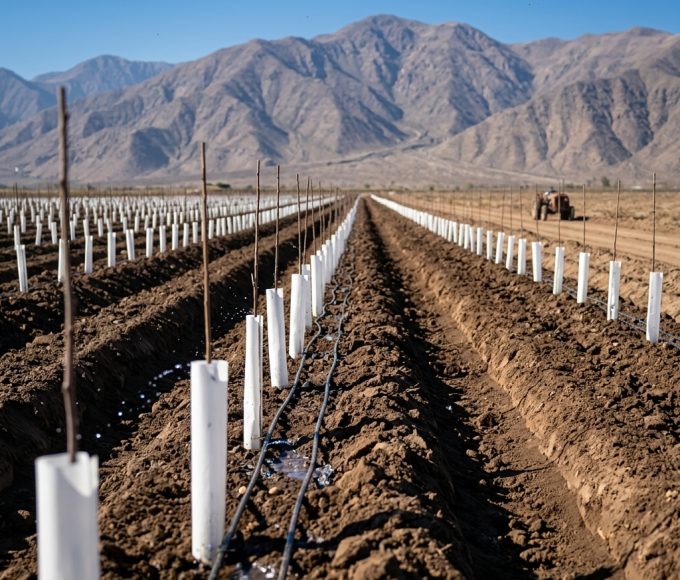
Technical projections indicate an increase from the current 14,000 hectares to 16,500 hectares by 2030. However, a massive expansion ignores market absorption: each additional 1,000 hectares adds approximately 10,000 dry tons that global demand must absorb. If the planted area were to climb to 18,000 or 20,000 hectares due to the culling of other fruit crops (cherries, table grapes, apples, pears), the oversupply would cause a severe price collapse.
For now, the speed of expansion is being held back by nurseries: the limited availability of plants is preventing an uncontrolled surge. Prudence dictates that we must not transform a sector that is currently well-organized into a global distribution problem.
|
Last 5 years (2021-2025)
US$ 2.20/kg
Peak of the recent cycle; distorts the profitability assessment.
|
Projected cutting floor
US$ 1.60/kg
Prudent threshold for evaluating IRR and operating leverage.
|
Historical average (1999-2025)
US$ 1.41/kg
Average age of 27 years; with costs of US$ 10,000/ha leaves minimal margins.
|
Operating costs, drying and the technological transition of the oven.
Evaluating an investment in D'Agen requires analyzing the complete historical series: the average of the last 27 years is US$1.41/kg. With a production cost close to US$10,000 per hectare and standard yields of 10,000 kg/ha—a goal that is far from easy to achieve in all areas—a price of US$1.40 leaves only US$4,000/ha of operating margin, compared to the US$12,000 obtained during the recent peak.
The vulnerability is exacerbated for those who lack their own drying capacity. The contracted service costs approximately US$1,44T 0.50/kg in an oven and US$1,44T 0.20/kg in the sun. In years of low prices, the oven fee devours the producer's profit margin.
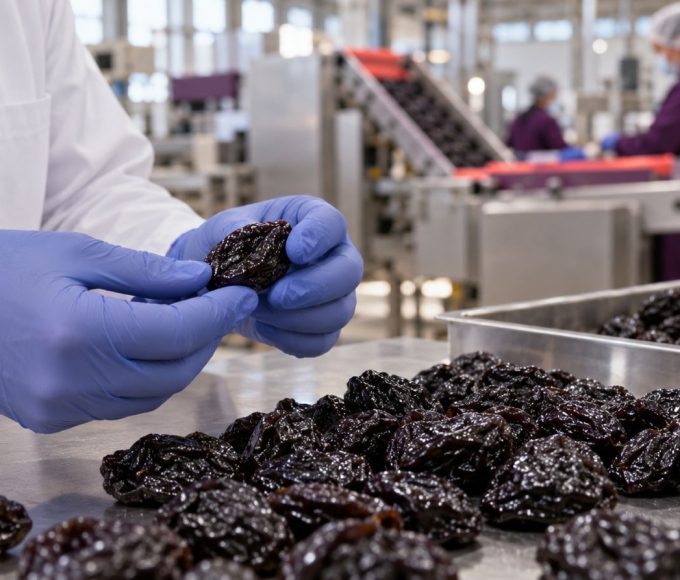
At the same time, the industry is accelerating its technological transformation. Chile traditionally operated with 701,330 tons of sun-dried fruit on open fields and 301,330 tons in ovens. The trend is moving towards a 60/40 or 50/50 balance. The open field occupies one hectare for every three hectares of orchard and exposes the fruit to the elements for 12 to 15 days. The oven processes the fruit in 24 hours, standardizes the moisture content to 201,330 tons, and provides sanitary guarantees, but requires a high investment for only one month of annual use.
Fresh exports cannot absorb unlimited surpluses. Historically, only between 151 and 301 tons of an orchard's volume qualifies for fresh export to China. It's a tactical alternative to improve cash flow when dry fruit sales decline, but it requires exceptional sizes and strict standards; without consistent quality, the risk of trade penalties at the destination negates the advantage.
Market geostrategy: the advantage of not depending on a single client.
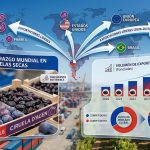
Unlike cherries, which are dependent on China, plums maintain a multipolar base: Europe remains the structural anchor, along with the consistent supply from Mexico and Brazil. While the surge in Chinese consumption over the last four years has boosted prices, it introduces uncertainties that exporters must consider.
China has an estimated 60,000 hectares of cultivated land (according to the 2026 IPA Congress in Italy), equivalent to the combined areas of the United States (15,000 ha), Chile (13,500 ha), France (10,500 ha), and Argentina (8,500 ha). As long as its domestic market absorbs this production, there is no friction; however, if the Asian giant generates exportable surpluses or moderates its consumption, the international supply will face immediate pressure.
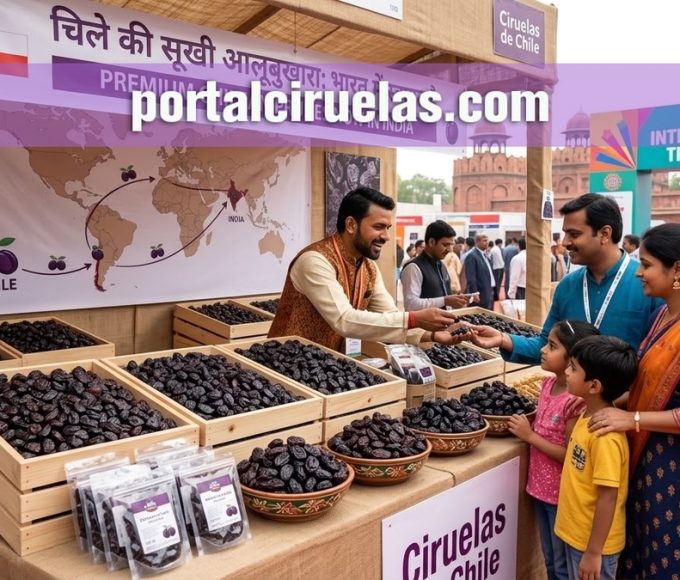
Therefore, the global strategy aims to open high-volume markets like India to reduce inventories—and defend the quality premium against California, which oven-dries its 100%. To compete in the most demanding supermarkets, South American producers need to mechanize pruning and harvesting, reduce splitting damage, and guarantee a tenderized and pitted product without sanitary deviations.
- Project new developments with defensive returns of US$ 1.60, avoiding leverage based on the exceptional peaks of the last five years.
- Integrate own drying infrastructure to eliminate the third-party fee of US$ 0.50/kg in oven, which is crucial for profitability in years of average prices.
- Operate the fresh fruit channel tactically (15% to 30% of the volume), without neglecting the nutritional and harvesting program for dry fruit.
- Preserve the diversification of destinations towards Europe and Latin America, without overemphasizing exposure to specific Chinese demand.
- Advance certifications and field mechanization to protect large sizes and healthy fruit, the only factor that safeguards the unit value.
Plum cultivation requires discipline. The challenge for growers and exporters is not to break planting records, but to ensure that every additional kilo finds profitable demand at controlled costs.



 Spanish
  English
  Chinese


Leave a comment